Personal diamond tips: craft custom gems with meaning


What does it mean to own a diamond that is genuinely, irreversibly yours? Not engraved with initials, not selected from a catalog, but grown with your own DNA woven into its very structure. Personalized luxury with DNA has redefined what fine jewelry can mean, moving it from a beautiful possession into a living legacy. In this guide, you’ll find the criteria that matter when choosing a personalized diamond service, the most innovative options available today, a direct comparison of each approach, and the right questions to ask before you commit.
Table of Contents
Key Takeaways
Point | Details |
Personalization options | From DNA infusion to custom engraving, you have many ways to make your diamond truly yours. |
Choose the right provider | Assess providers based on gem quality standards, ethical sourcing, and advanced personalization techniques. |
Emotional value matters | A DNA-infused diamond often holds more meaning and legacy than traditional inscriptions. |
Ask before you commit | Prepare questions about the process, timeline, and care to ensure your custom diamond meets your expectations. |
How to evaluate personal diamond services
Choosing the right provider for a personalized diamond is not like selecting a ring from a display case. You are commissioning something that will outlast you, and the quality of that experience starts long before the gem is cut.
Four criteria should anchor every evaluation:
Gem quality: Look for providers who follow strict gemological standards. Diamond quality criteria include cut, clarity, color, and carat weight, all of which must be certified by a recognized independent laboratory.
Personalization options: Not all customization is equal. DNA infusion, where biological material from hair or nails is incorporated into a lab-grown diamond, is the most meaningful and technically demanding option available.
Design flexibility: Can the provider accommodate custom shapes, metal settings, and companion stones? Flexibility here determines whether the final piece reflects your vision or a template.
Ethical sourcing: Confirm that materials are conflict-free and that the DNA diamond creation process follows a strict, documented chain of custody for your biological material.
Criterion | Traditional Engraving | DNA Infusion |
Personalization depth | Surface only | Molecular level |
Certifiable uniqueness | Limited | High |
Ethical sourcing required | Standard | Rigorous |
Design flexibility | Moderate | Extensive |
The chain of custody question deserves special attention. When you send hair or nail clippings to a provider, you need documented proof of exactly how your material is handled, stored, and incorporated. Ask for a written protocol before signing anything.
Pro Tip: Request a copy of the gemological certificate and the chain of custody documentation before your consultation ends. A reputable provider will offer both without hesitation.
Traditional engraving places a mark on the surface of a finished stone or setting. DNA infusion is fundamentally different: your biological material becomes part of the diamond itself during formation. The distinction is not cosmetic. It is the difference between a signature on a painting and the artist’s fingerprint inside the canvas.
Questions worth asking every provider:
What independent body certifies your diamonds?
How is biological material handled and stored?
Can I see examples of past custom work?
What happens if I am not satisfied with the result?
With these possibilities in mind, the next step is to choose the best provider and process for your personal diamond.
Innovative personalization ideas for diamond tips
Understanding what’s possible sparks ideas for making your own diamond tip uniquely meaningful.
Modern diamonds can be infused with hair, ashes, or other biological material to create keepsakes that carry genuine physical presence. That single capability has opened a creative space that jewelry designers are still exploring.
Here are the most compelling personalization techniques available today:
DNA infusion from hair or nails: The most intimate option. Your biological material is extracted and integrated into the diamond during lab formation. The gem is physically and permanently yours.
Color tinting inspired by sentiment: Lab-grown diamonds can be produced in specific hues. Some clients choose a color linked to a loved one’s favorite shade or to a family tradition.
Laser-etching: Coordinates of a meaningful location, a fingerprint, or a short phrase can be etched onto the diamond’s girdle with microscopic precision. Invisible to the naked eye, visible under magnification.
Companion stones and custom metalwork: Pairing a DNA-infused diamond with stones that hold sentimental history, a grandmother’s sapphire, a partner’s birthstone, creates a piece that layers meaning across generations.
“The most extraordinary pieces we’ve seen combine DNA with design elements that carry their own stories. When those layers meet, the result is not just jewelry. It is a family artifact.”
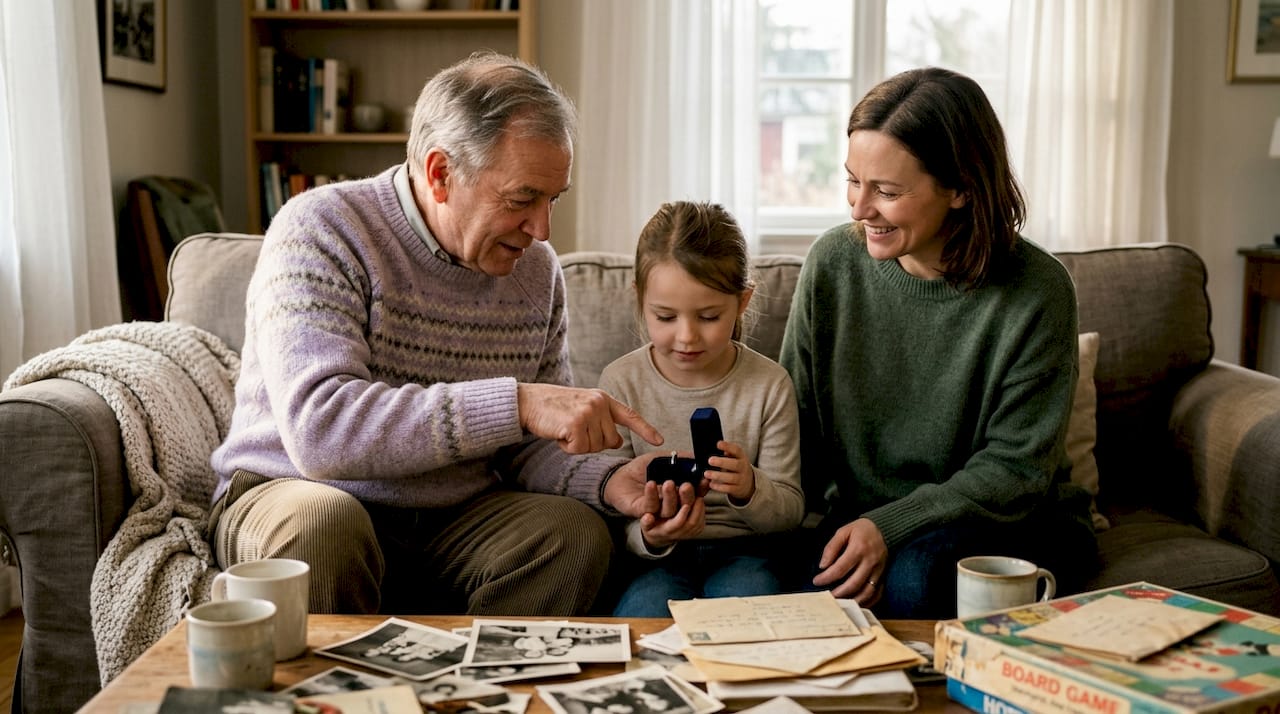
Consider the story of a client who commissioned a diamond that carried the DNA of three generations: hair from a grandmother who had passed, from a living parent, and from a newborn grandchild. The resulting stone represented continuity in a way no inscription ever could. You can explore more diamond personalization examples to find approaches that resonate with your own story.
Pro Tip: Before deciding on a personalization method, write down the story you want the diamond to tell in 50 words or less. That exercise will make every design decision easier and more coherent.
For clients who want a full account of the technical steps involved, reviewing personalized memorial jewels creation walkthroughs can help set accurate expectations about timing and process. The bespoke DNA diamonds available today are the result of years of refinement, and understanding that process deepens the experience of owning one.
Comparing popular personal diamond options
When several personalized options stand out, a direct comparison can clarify the best approach for your story and budget.
Option | Cost range | Turnaround | Sentimental value | Best for |
Engraving | Low | 1 to 2 weeks | Moderate | Celebration gifts |
DNA infusion | Premium | 6 to 10 weeks | Exceptional | Legacy, memorial |
Bespoke design | High | 8 to 14 weeks | High | Statement pieces |
Each approach serves a different intention. Understanding which fits your purpose saves time, money, and emotional energy.
Engraving is accessible, fast, and appropriate for milestone gifts like anniversaries or graduations. It personalizes the setting or surface but does not change the diamond itself. Suitable for clients who want sentiment without complexity.
DNA infusion is the most exclusive option. DNA-infused diamonds require advanced lab processes and are categorically more unique than any surface treatment. Ideal for memorials, generational gifts, or anyone who wants the diamond to carry genuine biological identity.
Bespoke design combines custom geometry, rare materials, and personalized metalwork into a fully original piece. Often paired with DNA infusion for clients who want both content and form to be singular.
Service level is another differentiator that the price table does not capture. Look for providers who offer:
A dedicated consultation before any work begins
Design proofs or 3D renderings for approval
Written aftercare instructions and maintenance guidance
A clear policy for revisions or concerns after delivery
For clients considering personalized luxury with DNA, the service experience around the diamond matters as much as the gem itself. Reviewing an exclusive diamond tribute checklist before your consultation can help you arrive prepared and confident.
The right choice depends on why you want the piece. For a memorial, DNA infusion is unmatched. For a celebration, engraving or bespoke design may serve just as well at lower cost. For a generational heirloom, combining DNA infusion with full bespoke design creates something no other family will ever own.
Making your decision: What to ask and expect
Once you’ve narrowed your choices, a little preparation ensures the journey is smooth and the results exceed your vision.
Before you commit to any provider, run through these essential questions:
How is my DNA material documented from submission to incorporation?
What gemological body certifies the finished diamond?
What is the exact timeline, and what delays are possible?
What maintenance does the finished piece require?
What is your policy if the piece does not meet the agreed specifications?
Knowing the answers in writing protects you and signals that the provider takes accountability seriously.
The creation process for a DNA-infused diamond typically unfolds in stages: biological material submission, extraction and purification, diamond formation in a controlled lab environment, cutting and polishing, setting, and final certification. Each stage has its own timeline. Rushing any of them compromises the result.
“When my diamond arrived, I held something I had never held before: a piece of the earth shaped around a piece of myself. No purchase I’ve made before felt like this one.”
This emotional dimension is well documented. The emotional value of a DNA diamond is often more significant than its market value, and clients consistently report that the meaning deepens over time rather than fading.
To maximize long-term legacy:
Document the story behind the piece in writing and store it with the certificate
Photograph the diamond at each significant family moment
Consider how the piece will be transferred across generations and communicate that intention clearly
If your goal is to memorialize loved ones in a form that lasts, a personalized diamond is one of the few choices that genuinely grows in meaning as years pass.
Why true personalization transforms diamonds into legacy
Most people think of personalization as customization. A monogram. A date. A small engraving tucked inside a band. These touches are nice. They are not legacy.
Legacy requires that the object carry something irreplaceable. A DNA-infused diamond does exactly that. It holds science and emotion of gems in a form that no other object can replicate. The carbon that makes a diamond is among the oldest material in the universe. When it is formed around your biological identity, the symbolism is not metaphorical. It is literal.
We have seen clients pass their DNA diamonds to children and grandchildren the same way other families pass down land or letters. The stone becomes an emotional cornerstone, a physical object around which stories are told and identity is anchored. That does not happen with an engraved initial.
The uncomfortable truth about luxury jewelry is that most of it is interchangeable. Two diamonds of identical specifications are indistinguishable without documentation. A DNA-infused diamond is the only gemstone in the world that is biologically unique. That distinction is not a marketing claim. It is a fact of the process. If you want jewelry that means something beyond its price, genuine personalization is the only path.
Start your one-of-a-kind diamond journey
You’ve spent time understanding the criteria, the options, and the questions worth asking. Now comes the part that matters most: doing it.
Our custom jewelry design service is built for clients who want more than a beautiful gem. Every piece begins with a personal consultation where your story, your timeline, and your vision are the starting point. Whether you’re creating a memorial piece, a generational gift, or a statement of identity, our team will guide you from biological material submission to finished diamond. Schedule your personal diamond consultation today and take the first step toward a diamond that only you could ever own.
Frequently asked questions
How is a personal diamond tip infused with DNA?
DNA from hair or nails is purified and then incorporated via advanced synthesis into the diamond’s structure during lab formation, making the gemstone physically and permanently unique to one person.
Is DNA diamond personalization more valuable than engraving?
DNA diamonds exceed engraving in emotional significance and exclusivity because the personalization is molecular rather than surface-level, making each stone genuinely irreplaceable.
What should I ask before buying a personalized diamond tip?
Ask about gem quality certification, the DNA handling protocol, timeline, and aftercare. Provider transparency and certification are the clearest indicators of a trustworthy service.
How long does it take to create a custom DNA diamond?
Timelines for DNA diamond creation typically range from 6 to 10 weeks depending on the complexity of the customization and the specific service chosen.
Recommended
Comments