Stepwise diamond creation: crafting personalized memorial jewels

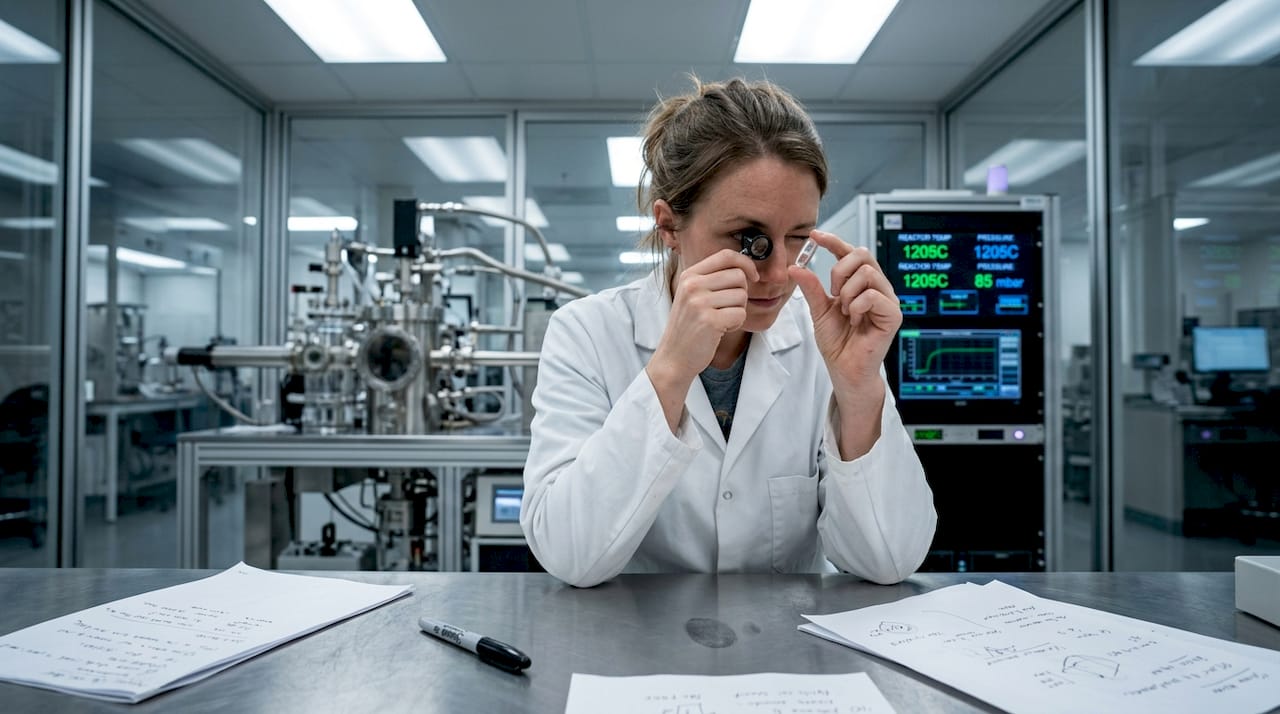
There is something profound about wearing a diamond that carries the carbon of someone you love. Not a symbol. Not a metaphor. The actual material, transformed under extreme conditions into a gemstone that will outlast everything. At Shinlabz, we work with hair and nails to extract DNA and infuse that biological signature into a finished diamond in just two hours, giving you a piece of jewelry that is genuinely, irreversibly personal. This article walks you through the full creation process, from the science behind diamond growth to the finishing touches that turn a lab-grown stone into a luxury heirloom.
Table of Contents
Key Takeaways
Point | Details |
Personal carbon transformation | Ashes or hair are purified to carbon and used as the foundation for memorial diamonds. |
HPHT vs. CVD methods | Both processes create lab-grown diamonds, but differ in speed, technique, and personalization. |
Luxury authentication | Top providers offer GIA/IGI certification and traceability, ensuring your diamond’s provenance. |
Emotional significance | Memorial diamonds reshape luxury by blending scientific innovation and deep personal meaning. |
Expert-driven process | Following a stepwise method ensures a safe, ethical, and beautiful commemorative jewel. |
Understanding diamond creation: HPHT and CVD methods
Every memorial diamond begins with a choice: which growth method will transform your personal carbon into a sparkling, certified gemstone? Two technologies dominate the field, and each carries distinct advantages depending on your priorities.
HPHT (High Pressure, High Temperature) replicates the geological conditions deep within the Earth. The HPHT process uses extreme pressure and temperatures exceeding 1,500 degrees Celsius to force carbon atoms into a crystalline diamond structure around a seed crystal. Growth happens relatively fast, making it a strong choice when commemorative carbon needs to be incorporated quickly and efficiently. The resulting stones tend to have a warmer tone, which many clients find emotionally resonant.
CVD (Chemical Vapor Deposition) works differently. The CVD process uses plasma and gas to deposit carbon atoms layer by layer onto a substrate, building the diamond from the ground up with surgical precision. This method allows for exceptional control over clarity and color, which is why it is often preferred for high-end, bespoke applications.
For memorial diamonds, both methods are viable. The ashes to diamonds process at Shinlabz leverages whichever technique best suits the carbon source and the desired final aesthetic.
Feature | HPHT | CVD |
Growth speed | Faster | Slower, more controlled |
Color outcome | Often warmer tones | Colorless to near-colorless |
Clarity control | Good | Excellent |
Personalization fit | High | Very high |
Typical timeframe | 6 to 10 weeks | 8 to 14 weeks |
Key advantages of lab-grown methods for memorial diamonds:
Ethical sourcing: No mining, no conflict stones
Traceability: Full documentation of origin
Customization: Color, cut, and carat shaped to preference
Certified quality: GIA and IGI grading available
Emotional authenticity: Personal carbon at the core
Browse our diamond adorned accessories to see how these methods translate into finished luxury pieces.
With these foundational methods in mind, let’s examine what materials and preparation are required to begin the process.
Gathering materials: Preparing carbon source and essentials
The most intimate part of creating a memorial diamond is also the most technical. Before any growth can begin, the carbon source must be identified, collected, and purified to a standard that the diamond-growing equipment can actually use.
Ashes and hair provide carbon that must be purified and converted into graphite before it enters the growth chamber. This is not a simple step. Human remains contain a complex mix of minerals, salts, and organic compounds. Only the carbon fraction matters, and extracting it cleanly requires controlled heating in a low-oxygen environment.
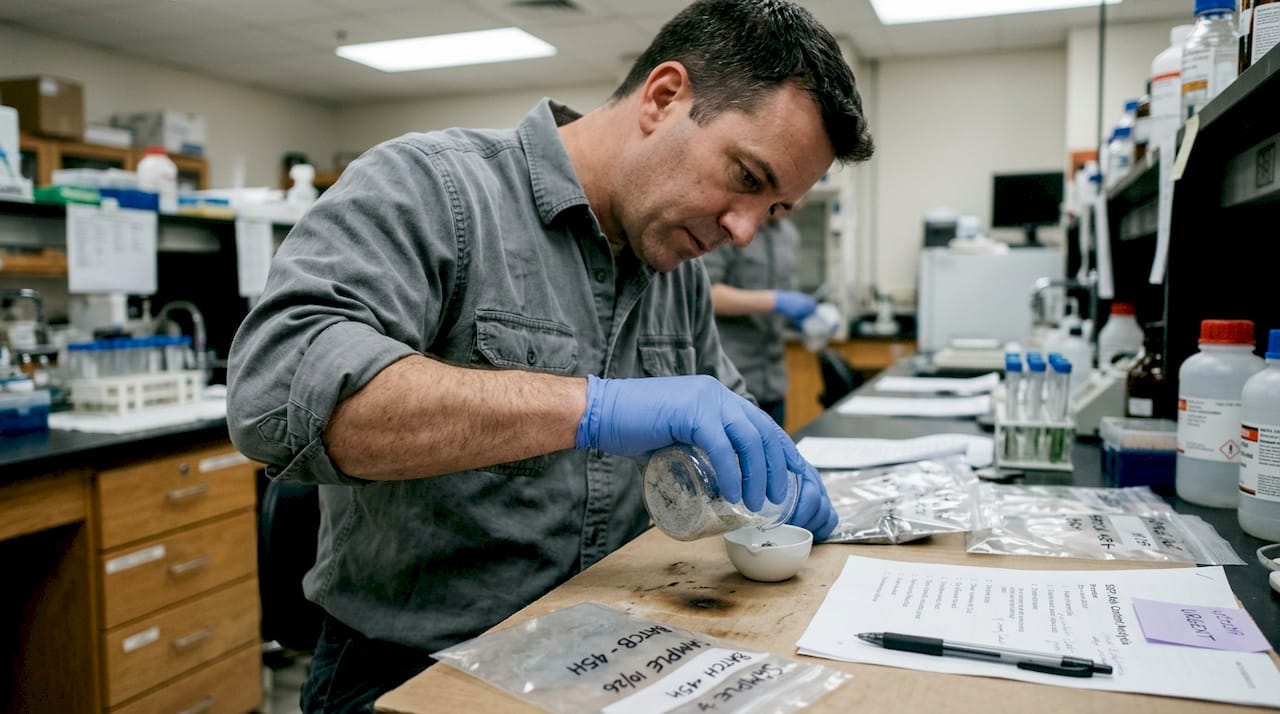
Source material | Recommended quantity | Carbon yield | Notes |
Cremated ashes | 100 to 200 grams | 1 to 4% | Mineral content varies |
Hair | 5 to 10 grams | Higher purity | Easier to purify |
Nails | 3 to 5 grams | High purity | Consistent carbon profile |
At Shinlabz, we work specifically with hair and nails, which offer a cleaner carbon profile and a more consistent purification result compared to ashes. The DNA is extracted first, then the carbon is isolated and prepared for infusion into the finished diamond.
Trace elements in the source material directly influence the diamond’s final color. Boron traces can produce blue tones. Nitrogen creates yellow hues. This is not a flaw. Many clients specifically request that the natural trace element profile be preserved, making the color a direct expression of the person the diamond honors.
Essentials for material preparation:
Collect hair or nails in a clean, sealed container
Avoid contamination with synthetic materials or adhesives
Provide a minimum quantity as specified by your provider
Store at room temperature away from moisture
Confirm chain-of-custody documentation with your jeweler
Pro Tip: If you are collecting hair, include strands from the root when possible. Root material contains higher concentrations of biological material, which supports a richer DNA extraction before the carbon purification stage.
Our custom jewelry design services team can advise you on exactly how much material to gather based on your desired carat weight and method.
Once all materials are properly prepared, you can begin the stepwise creation of the diamond itself.
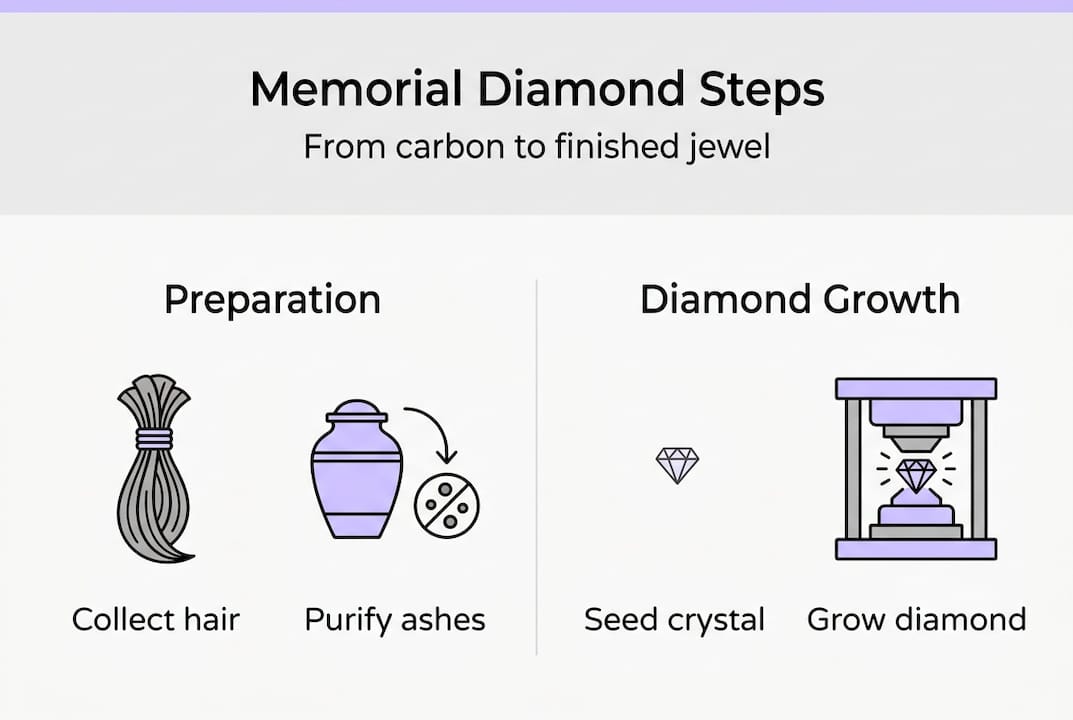
Step-by-step diamond creation: From seed to sparkling jewel
The transformation from personal carbon to a finished diamond follows a precise sequence. Skipping steps or rushing variables is where quality is lost. Here is how the process unfolds, whether you are working with HPHT or CVD.
Carbon purification: The collected hair or nails are processed to isolate pure carbon, which is then converted into graphite form.
Seed crystal selection: A tiny diamond seed crystal is chosen. This acts as the foundation on which your diamond will grow.
Chamber loading: The purified graphite and seed crystal are placed into the growth chamber, along with any catalyst materials required for HPHT.
Growth initiation: For HPHT, pressure and temperature are ramped up gradually. For CVD, the plasma gas mix is introduced and carbon deposition begins.
Controlled growth phase: The HPHT and CVD methods transform carbon over days to weeks, with continuous monitoring of variables including temperature stability, gas ratios, and pressure consistency.
Rough diamond extraction: Once growth is complete, the rough diamond is carefully removed from the chamber and inspected.
Initial grading: The rough stone is assessed for size, color, and internal characteristics before cutting begins.
Cutting and polishing: Master cutters shape the stone to maximize brilliance and minimize inclusions.
Final inspection and certification: The finished diamond is submitted for GIA or IGI grading.
Pro Tip: Ask your provider for documentation at every stage, not just the final certificate. A reputable memorial diamond service will offer photos or reports from the growth and cutting phases, giving you confidence that your personal carbon was present throughout.
“The DNA decomposes during purification; what remains and enters the diamond is the carbon itself. That carbon is the physical legacy.”
Explore the memorial brilliance diamond collection to see finished examples, and visit our diamond creation blog for deeper technical breakdowns of each stage.
With the diamond creation steps laid out, it’s important to know how to verify the quality and authenticity of the finished product.
Verifying, finishing, and personalizing your diamond
A diamond without verification is just a stone with a story. For high net worth clients, the finishing and authentication process is where a memorial diamond becomes a true luxury asset.
Certification is the first priority. Reputable labs like GIA (Gemological Institute of America) and IGI (International Gemological Institute) provide grading reports that confirm the diamond’s cut, color, clarity, and carat weight. These reports also confirm the stone is lab-grown, which is essential for insurance and estate purposes.
Memorial diamonds offer certified, ethical luxury, though it is worth noting clearly: the diamond preserves carbon, not DNA. DNA decomposes during the purification process. What you receive is a gemstone built from the literal physical material of the person or source you chose. That distinction matters for informed buyers.
Statistic callout: Lab-grown diamonds have seen a significant rise in market share among luxury buyers who prioritize traceability and ethical sourcing over mined stone prestige.
Finishing steps that elevate a memorial diamond:
Custom cut selection: Round brilliant, oval, cushion, or bespoke shapes
Engraving: Dates, names, or personal messages inside the band or on the girdle
Setting design: Platinum, rose gold, or yellow gold settings crafted to your specification
Traceability documentation: Chain-of-custody records from material submission to finished stone
Presentation packaging: Luxury boxes, certificates, and provenance cards
Our immortalize diamond service handles every one of these finishing details. For inspiration on how others have honored their loved ones, read about honoring loved ones with diamonds through our Shineternity collection.
These finishing steps mark the completion of your journey, but there’s more to consider about the sentimental and expert perspectives on the process.
Rewriting luxury: Memorial diamonds as a new tradition
The luxury market has long equated value with rarity. Mined diamonds commanded premiums because of geological scarcity. But scarcity was never what made a diamond meaningful to the person wearing it.
What we see at Shinlabz is a fundamental shift. Clients are not asking for the rarest stone. They are asking for the most personal one. And that is a completely different standard of value. Personal carbon, certified and traceable diamonds are creating a new luxury benchmark that no mined stone can match: provenance that is emotionally irreplaceable.
The common misconception we want to address directly is the DNA question. Some providers market “DNA diamonds” in ways that imply the genetic code is somehow locked inside the stone. It is not, and it cannot be. DNA does not survive the temperatures required for diamond growth. What survives is carbon. But carbon from a specific person, purified and grown into a certified diamond, is still the most intimate material object you can own. That truth is more powerful than any marketing claim.
What discerning buyers should demand from any memorial diamond provider: full chain-of-custody documentation, independent certification, clear explanation of what is and is not preserved, and access to custom jewelry insights that match the stone to a setting worthy of its meaning.
Bring your story to life with Shinlabz memorial diamonds
If this process resonates with you, Shinlabz is ready to guide you through every step.
We specialize in infusing DNA extracted from hair or nails into a finished diamond, with the entire process completed in just two hours at our studio. From your first consultation to the moment you hold a certified, personalized gemstone, our team handles every detail with precision and care. Explore our memorial brilliance diamond collection, review our custom jewelry design options, or book an online consultation to speak directly with our specialists. Your story deserves to be set in something permanent.
Frequently asked questions
How much carbon is needed from ashes or hair to create a diamond?
It typically requires 100 to 200 grams of ashes or a smaller quantity of hair, since carbon yield from ashes runs between 1 and 4% after purification. Hair and nails tend to yield a higher and more consistent carbon purity.
Can DNA itself be preserved inside a memorial diamond?
No. DNA decomposes during purification at the temperatures required for diamond growth, so only the carbon is incorporated into the final stone. The diamond is built from personal carbon, not genetic code.
What certification proves my diamond was lab-grown from personal carbon?
Major grading labs like GIA and IGI certify lab-grown diamonds, and memorial diamond traceability documentation from your provider confirms the chain of custody from source material to finished stone.
How long does the diamond creation process typically take?
Depending on the method and provider, the process takes 6 to 12 weeks or longer. At Shinlabz, the DNA infusion stage itself is completed within two hours, with the full diamond creation following the standard growth timeline.
Recommended
Comments