Understanding Intimate Diamonds: Personalized Luxury With DNA

Most people assume luxury jewelry personalization stops at engraving initials or choosing a custom cut. That assumption leaves an extraordinary option completely off the table. Intimate diamonds are highly personalized luxury diamonds created from a customer’s own DNA, turning a gemstone into something no money alone can replicate. For high net worth individuals who have already owned the finest pieces the market offers, this is the next frontier. In the sections ahead, you will discover exactly what intimate diamonds are, how they are made, and why they represent a genuinely new standard for meaningful luxury.
Table of Contents
Key Takeaways
Point | Details |
Ultimate personalization | Intimate diamonds use your DNA, making each piece uniquely personal and deeply meaningful. |
Scientifically crafted | Lab-grown diamonds from DNA follow a rigorous, reliable scientific process. |
Luxury redefined | Intimate diamonds surpass traditional personalization, embracing emotional legacy and connection. |
Exclusive innovation | This personalization trend remains niche, ideal for discerning luxury buyers. |
Actionable next steps | You can consult specialists to create your own intimate diamond for lasting significance. |
What are intimate diamonds?
An intimate diamond is not simply a diamond with your name on it. It is a lab-grown diamond whose carbon originates from your own genetic material, making it biologically and symbolically yours in a way no engraving or custom setting ever could be.
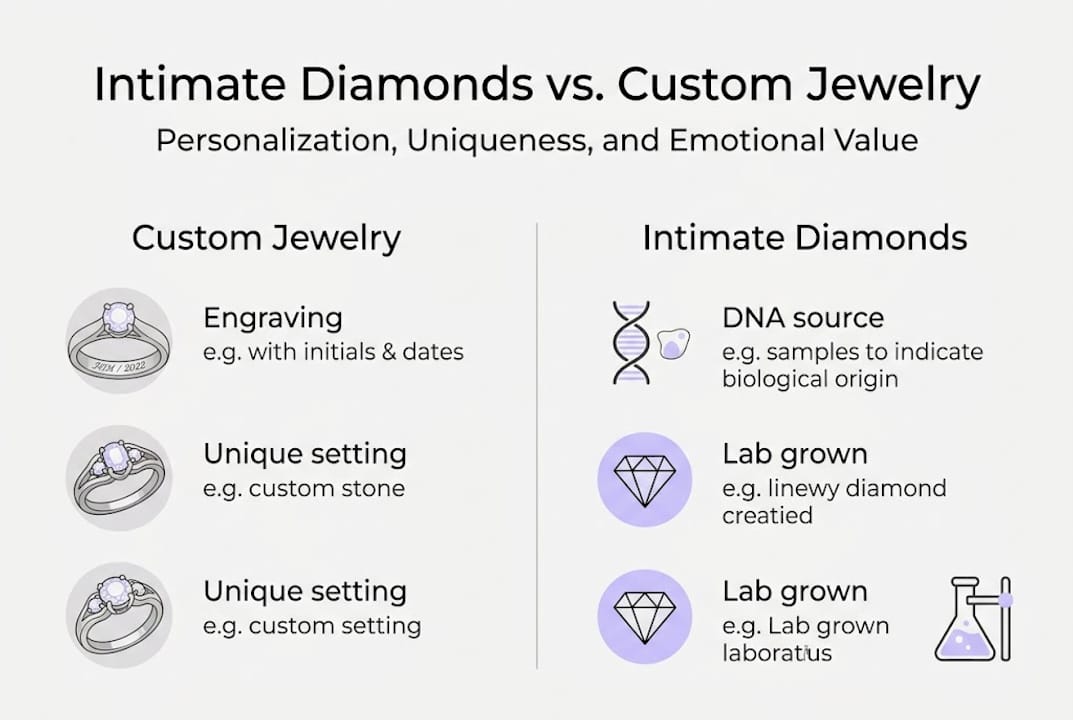
Traditional personalization in luxury jewelry has always worked at the surface. You choose the cut, the metal, the stone, and perhaps add an inscription. The diamond itself, however, remains anonymous. It could belong to anyone. An intimate diamond removes that anonymity entirely.
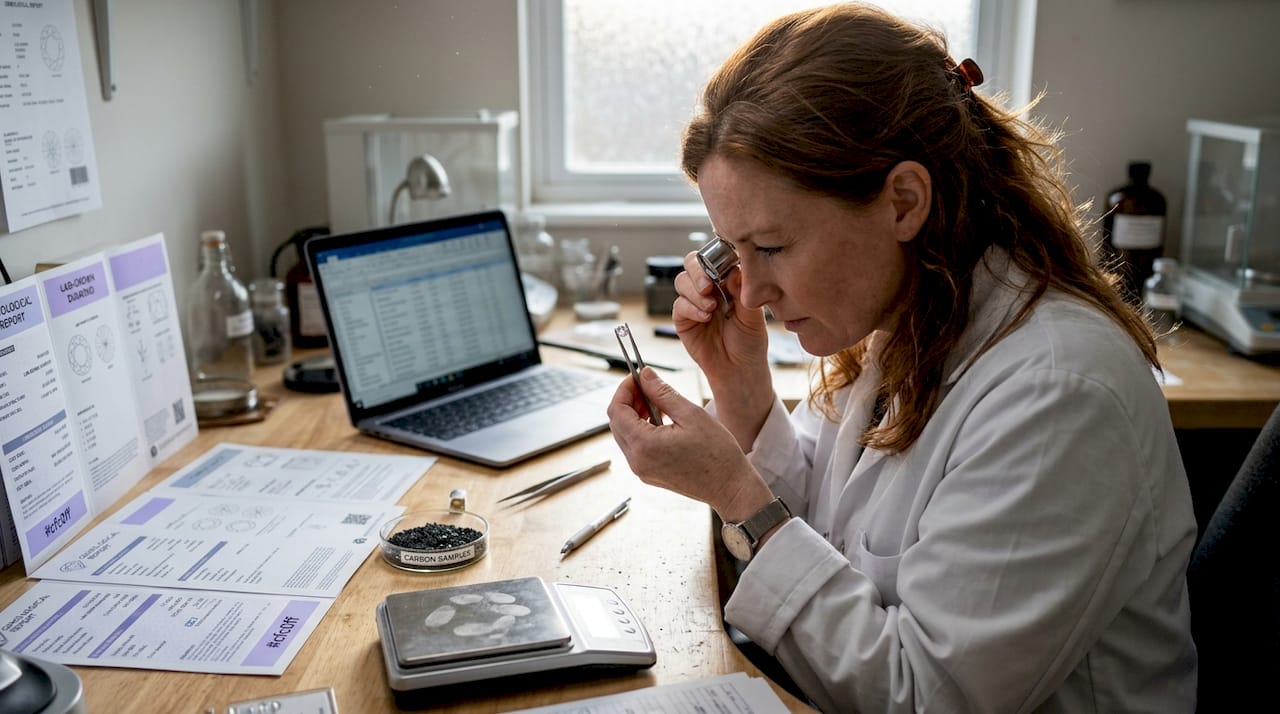
The science behind this starts with DNA extraction. Solo for Diamonds uses blood samples and personal genetic material to create lab-grown diamonds. The carbon derived from that DNA becomes the literal building block of the finished stone. What you wear is, in a measurable sense, a part of you.
Here is what sets intimate diamonds apart from every other form of custom jewelry design:
Genetic origin: The diamond’s carbon comes from your own DNA, not a generic source
Biological uniqueness: No two people share the same DNA, so no two intimate diamonds are identical
Emotional permanence: The stone carries your identity at a molecular level
Legacy potential: It can be passed down as a family heirloom with genuine personal provenance
Scientific verification: The process is documented and traceable, not symbolic
“A diamond made from your DNA is not a metaphor for closeness. It is closeness, crystallized.”
The luxury personalization trends shaping 2026 point clearly toward meaning over mere aesthetics. Collectors and connoisseurs are asking a new question: not just what does this piece look like, but what does this piece mean. Intimate diamonds answer that question at the deepest possible level.
It is worth noting that this is not a novelty. The carbon extraction and lab-grown diamond formation process follows rigorous scientific protocols. The result is a genuine, certifiable diamond, not a simulant or a symbolic token. It has the same optical, chemical, and physical properties as any mined or lab-grown stone. The only difference is where its carbon came from.
The intimate diamond creation process
Understanding how an intimate diamond is made helps you appreciate why it carries such weight. The process is precise, and every step is designed to preserve the integrity of your genetic material while producing a diamond of genuine luxury quality.
Here is how the journey unfolds from DNA to finished stone:
Sample collection: Your DNA is collected, typically through a blood draw or, in some cases, hair or nail clippings. The sample is handled under strict protocols to prevent contamination.
DNA extraction and purification: The genetic material is isolated and purified in a laboratory setting. This step removes everything except the carbon-rich DNA strands needed for the next phase.
Carbon conversion: The purified DNA is processed to extract its carbon content. This carbon becomes the raw material for diamond formation.
Lab diamond growth: Using either High Pressure High Temperature (HPHT) or Chemical Vapor Deposition (CVD) methods, the carbon is subjected to extreme conditions that replicate natural diamond formation. Over time, a rough diamond crystal grows.
Cutting and grading: The rough stone is cut, polished, and graded to luxury standards. You choose the cut, carat, and clarity profile that suits your vision.
Setting and design: The finished diamond is set into your chosen piece, whether a ring, pendant, bracelet, or a luxury diamond accessory like a custom keychain.
Solo for Diamonds transforms personal genetic material into a diamond for ultimate meaning and uniqueness, and the process we use at Shineternity follows the same principle of scientific rigor paired with luxury craftsmanship. Our entire process, from DNA infusion to finished diamond, takes approximately two hours.
Pro Tip: When selecting a provider, ask for documentation at each stage of the process. A reputable studio will give you a clear chain of custody from your DNA sample to the finished stone. Transparency here is not optional; it is the mark of a serious operation.
The ashes to diamonds process follows a similar scientific pathway, which gives you a useful reference point for understanding the carbon-to-diamond transformation. Both processes share the same foundational chemistry, just with different starting materials.
What makes the intimate diamond creation process genuinely remarkable is not the technology alone. It is the combination of scientific precision and personal meaning that no traditional jeweler can offer. You are not commissioning a piece. You are growing one, from yourself.

How intimate diamonds elevate luxury jewelry
Personalization in luxury has always been a signal of status. But there is a meaningful difference between personalization that says this was made for me and personalization that says this is made from me. Intimate diamonds belong firmly in the second category.
For high net worth individuals, the emotional impact is the primary driver. A diamond that carries your genetic code is not just a beautiful object. It is a statement of identity, a piece of legacy, and in some cases, a form of remembrance. Consider the applications:
Personal legacy: Commission an intimate diamond as a milestone gift to yourself, marking a life achievement with something literally irreplaceable
Partnership symbolism: Exchange intimate diamonds with a partner, each stone grown from the other’s DNA, for a level of symbolic union that no traditional ring can match
Memorial and remembrance: Create a diamond from a loved one’s DNA as a permanent, wearable tribute
Generational heirlooms: Pass down a stone that carries the family’s actual genetic history
Here is how intimate diamonds compare to traditional luxury personalization options:
Personalization type | Origin of uniqueness | Emotional depth | Replicability |
Engraving | Surface inscription | Low | Easily copied |
Custom cut | Design preference | Medium | Reproducible |
Bespoke setting | Aesthetic choice | Medium | Reproducible |
Intimate diamond | Genetic material | Very high | Impossible |
The comparison makes the value proposition clear. Intimate diamonds are ideal for those seeking hyper-personalized luxury jewelry, elevating beyond engraving and custom cuts to genetic origin. For collectors who have exhausted conventional options, this is not an incremental upgrade. It is a category shift.
Browsing diamond keepsakes designed around personal meaning reveals just how far luxury jewelry has evolved. The finest pieces now carry stories that are biologically embedded, not just aesthetically implied. And when you consider eternal memories with diamonds, the emotional architecture of intimate diamonds becomes even clearer.
Is the intimate diamond trend here to stay?
Any discerning buyer should ask whether this is a lasting innovation or a passing novelty. The honest answer is that intimate diamonds are currently niche, but the trajectory points toward sustained growth among luxury consumers.
No established mainstream adoption exists yet, with Solo for Diamonds highlighted in Forbes as innovative but niche. That niche status, however, is not a weakness. It is precisely what makes intimate diamonds appealing to high net worth individuals who value exclusivity above all.
Here is a look at the key factors shaping adoption:
Factor | Current status | Future outlook |
Technology availability | Limited providers | Expanding |
Consumer awareness | Low to moderate | Growing |
Price accessibility | Premium tier | Likely to broaden |
Regulatory clarity | Emerging | Stabilizing |
Cultural acceptance | Niche luxury | Mainstream potential |
What is driving interest among serious collectors and luxury buyers?
Scarcity: Very few providers can execute this process at a luxury standard, which keeps the category exclusive
Storytelling value: Every intimate diamond has a provenance story that is completely unique
Emotional resonance: Buyers are increasingly prioritizing meaning alongside aesthetics in luxury purchases
Technological credibility: Lab-grown diamonds have gained significant acceptance in the fine jewelry market, lending legitimacy to DNA-origin stones
Pro Tip: Before committing to any provider, request a full breakdown of their scientific process, quality certifications, and post-purchase documentation. The best studios treat the chain of custody for your DNA with the same care as a fine jeweler treats a rare stone.
For those exploring luxury innovation insights, the intimate diamond space rewards early adopters with pieces that will only grow in rarity and personal significance over time. If you are ready to move forward, the best step is to consult expert jewelers who specialize in DNA-origin diamonds and can walk you through the process with full transparency.
Why true personalization in luxury jewelry demands more than surface details
After years of working with clients who own extraordinary jewelry collections, one pattern becomes impossible to ignore. The pieces they reach for most often are not the most expensive ones. They are the ones that mean something.
Conventional personalization, engraving, custom cuts, bespoke settings, operates entirely at the aesthetic layer. It shapes how a piece looks. It does not change what a piece is. That distinction matters more than the industry has historically acknowledged.
Intimate diamonds reframe the entire conversation. When the carbon in your diamond came from your own DNA, the piece is not a representation of you. It is you, in a form that will outlast you by centuries. That is not a marketing claim. It is a physical fact.
The hard-won lesson from creating lasting jewelry memories is this: emotional resonance is not a feature you add to a piece. It is something you build into the origin of the piece itself. Intimate diamonds do not try to evoke meaning. They are meaning, grown from the inside out.
Make your diamond truly personal with Shineternity
You have seen what intimate diamonds are, how they are made, and why they represent a genuinely new standard in luxury personalization. The next step is making one yours.
At Shineternity, we infuse DNA extracted from hair or nails directly into a finished diamond, and the entire process takes just two hours. Whether you are creating a piece for yourself, a partner, or a lasting family legacy, our immortalize diamond service is built around your story. Explore our full range of diamond keepsakes or start with a custom jewelry design consultation to discover exactly what is possible when a diamond is made from you.
Frequently asked questions
How is a diamond made from my DNA?
A diamond is created by extracting carbon from your DNA, usually through a hair or nail sample, then forming a lab-grown diamond from that carbon using established high-pressure or vapor deposition methods. Solo for Diamonds uses blood samples and DNA to create lab-grown diamonds through the same foundational process.
What makes intimate diamonds different from custom or engraved jewelry?
Intimate diamonds incorporate your actual genetic material as the carbon source, making the stone biologically unique to you, which goes far beyond surface-level engraving or aesthetic customization. They are ideal for those seeking hyper-personalized luxury that elevates beyond custom cuts to genetic origin.
Is the process safe and scientifically reliable?
Yes, the process uses established laboratory methods for carbon extraction and diamond formation, with strict protocols at every stage. Solo for Diamonds transforms personal genetic material into a diamond using verified scientific methods for ultimate meaning and quality.
Are intimate diamonds widely available?
No, intimate diamonds remain a niche and specialized category with very few qualified providers and a predominantly high net worth client base. No mainstream adoption exists yet, which is part of what makes them so exclusive.
What should I look for in an intimate diamond provider?
Seek providers with transparent scientific processes, documented chain of custody from DNA to finished stone, and clear quality certifications. Solo for Diamonds uses blood samples and rigorous lab protocols as a benchmark for what a credible provider should offer.
Recommended
Comments