Top examples of diamond personalization for keepsakes

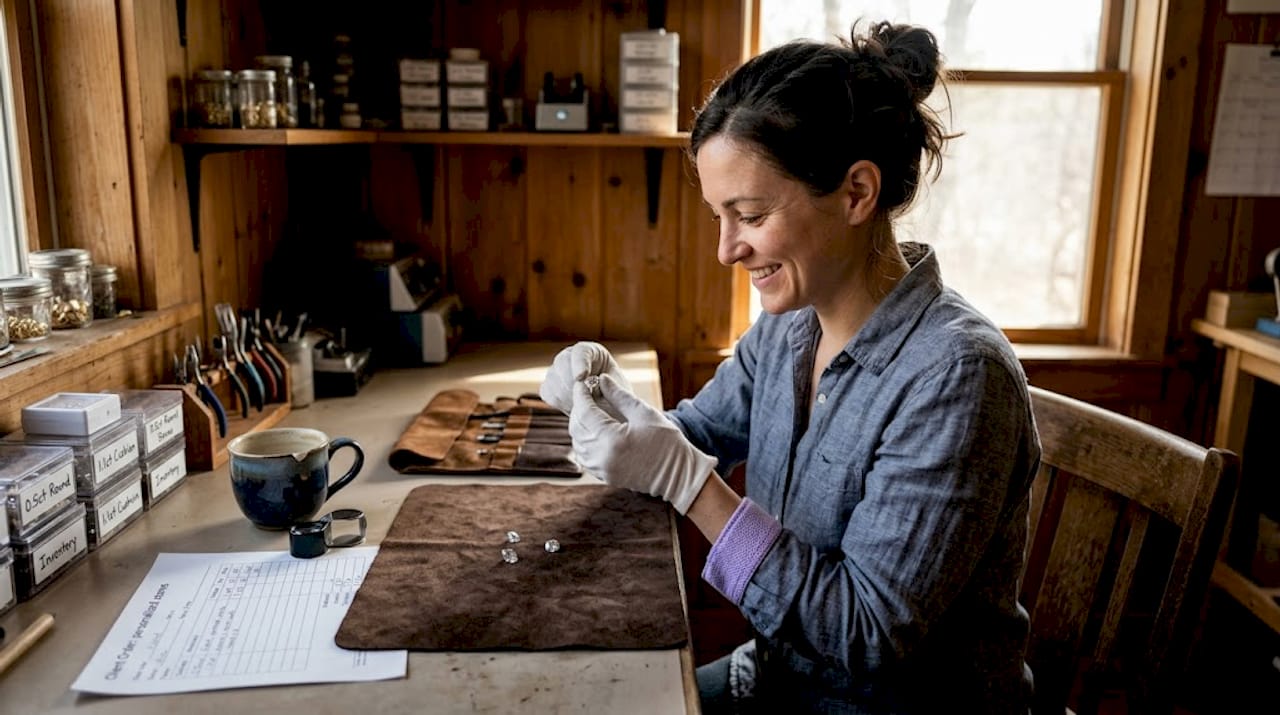
When a loved one passes or a milestone moment deserves something lasting, a generic piece of jewelry rarely feels like enough. You want something that holds a real piece of that person, that story, or that bond. Diamond personalization transforms carbon from cremated ashes or hair into a genuine, certified diamond, creating an heirloom that carries actual meaning. This guide walks you through how the process works, the real personalization options available, how to compare them side by side, and what to watch out for before you commit to a provider.
Table of Contents
Key Takeaways
Point | Details |
Personal carbon source | Diamonds can be grown from the ashes or hair of loved ones or pets for deep personalization. |
Flexible customization | You can select diamond shapes, colors, sizes, and engravings to match memories and style. |
Pricing and value | Memorial diamonds are premium-priced for their emotional significance, not just material. |
Ethical clarity | Choose transparent, certified providers and weigh alternatives for memorial jewelry. |
How diamond personalization works: The basics
Understanding the process makes it easier to trust it. At its core, diamond personalization involves creating lab-grown diamonds from carbon extracted from cremated ashes or hair of loved ones or pets. That carbon becomes the raw ingredient for a real diamond, not a replica or a symbolic gesture.
The process follows a clear sequence. First, you receive a secure collection kit and send in your material. The lab then purifies the carbon, removing everything that isn’t carbon until only the purest form remains. That purified carbon enters a high-pressure, high-temperature (HPHT) or chemical vapor deposition (CVD) chamber, where it crystallizes into a rough diamond over weeks or months. Once the rough stone forms, it gets cut, polished, and certified by a gemological authority.
Here’s what makes this different from any other keepsake:
Material requirements: About 1/2 cup of cremated ashes or 2 to 5 grams of hair
Pet-friendly: The same process works for pets, using their ashes or fur
No mixing: Each diamond is created from one person’s or pet’s material only
Certification: Every finished diamond receives a gemological certificate confirming its authenticity
Stepwise diamond process: Each stage is documented and handled individually
Timeline matters here. The process takes 6 to 10 months from material submission to the finished gem. That’s not a flaw. Growing a real diamond takes real time, and the result is a stone that will last forever.
Statistic callout: A finished memorial diamond requires as little as 2 grams of hair, making it accessible even when cremated remains are limited.
The emotional weight of this process is hard to overstate. Every diamond that comes out of this method holds a unique story, literally encoded in its carbon structure. That’s not marketing language. That’s chemistry meeting memory in a way no mass-produced pendant ever could. Exploring personalized gem creation in detail shows just how far the science has come.
Types of diamond personalization: Real-life examples
Now that you know how the process works, let’s explore how people bring personal meaning into their diamond choices. The options are wider than most people expect.
Shape is often the first decision. Round brilliant cuts are the most popular because they maximize sparkle. Princess cuts offer a modern, geometric feel. Heart-shaped diamonds are chosen frequently for romantic memorials or to honor a parent. Each shape carries its own emotional tone, and the right one often feels obvious once you think about the person it represents.
Color is where personalization gets striking. Natural lab-grown memorial diamonds can be created in yellow, blue, black, red, and colorless variations. The color depends partly on the carbon source and partly on controlled conditions during growth. Blue diamonds, for example, result from boron introduction during the process. Many families choose a color that meant something to the person they’re honoring.
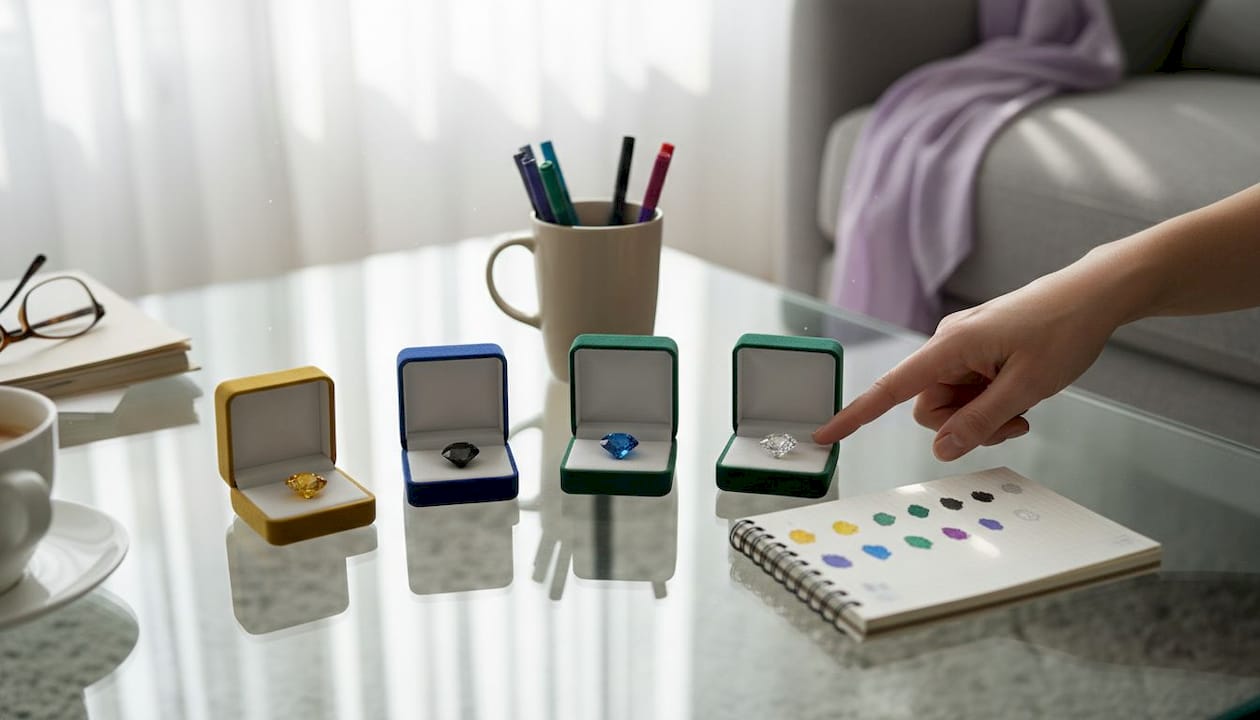
Size ranges from 0.25 carats up to 3 carats or more. Smaller stones work beautifully in everyday jewelry. Larger stones become statement pieces or centerpieces for formal settings.
Customization options include cuts, colors, sizes, and personal engravings for memorial jewelry. That last point matters. Engravings on the setting or band can include dates, names, coordinates, or short phrases that carry private meaning.
Here are some real-life scenarios people choose:
A daughter commissions a blue heart-shaped diamond pendant from her mother’s hair to wear daily
A couple creates matching small round diamonds from a pet’s ashes, set into simple bands
A family orders three diamonds from one person’s ashes so each sibling has their own stone
A widower has a 1-carat yellow diamond set into a ring he wears every day
Pro Tip: If carbon is limited, some providers allow supplementing with fabric from clothing or dried flowers. Always confirm this option and what it means for the final stone’s composition before committing.
For deeper memorial diamond inspiration, it helps to browse real examples of finished pieces. Seeing how eternal ashes diamonds look in finished settings makes the decision feel real rather than abstract.
Personalization options compared: Cuts, colors, and settings
With diverse personalization features, it helps to see how options stack up side by side. Providers offer 10 unique cuts, 7 striking colors, and a range of jewelry settings to fit any tribute.
Feature | Options available | Best for |
Cut | Round, princess, heart, oval, cushion, emerald, radiant, pear, asscher, marquise | Matching personality or occasion |
Color | Colorless, yellow, blue, black, red, green, pink | Symbolic meaning or preference |
Carat size | 0.25ct to 3ct+ | Budget and statement intent |
Setting | Ring, pendant, earring, bracelet charm | Lifestyle and wear frequency |
Engraving | Dates, names, coordinates, short phrases | Deepening personal meaning |
Settings deserve their own attention. Rings are popular for anniversaries and spousal memorials because they’re worn constantly and feel intimate. Pendants are the most common choice for parent or child memorials because they rest close to the heart. Earrings work well for those who want daily remembrance without drawing attention.
“A memorial diamond isn’t just jewelry. It’s a decision about how you want to carry someone with you every day.”
When comparing providers, names like Lonite, Saint Diamonds, and Eterneva come up frequently. Prices vary significantly. Entry-level options start around $1,400 to $2,000 for a small, rough or simple cut stone. Premium stones with larger carats, rare colors, and custom settings can reach $15,000 or more. Use a personalization checklist to make sure you’re comparing providers on the same criteria.
Understanding how diamonds store memories at a deeper level also helps you ask better questions when you contact a provider.
Price, requirements, and ethical questions: What to know before you buy
Now that you know what’s possible, here’s what to expect in terms of cost, requirements, and essential things to watch out for.
Cost reality check: Costs range from $1,400 to $3,500 for entry-level options, up to $40,000 or more for premium diamonds, which is 5 to 10 times the cost of a standard lab-grown diamond. You’re paying for the individualized process, the emotional guarantee, and the chain of custody documentation.
Tier | Price range | What’s included |
Entry | $1,400 to $3,500 | Small rough or simple cut, basic certificate |
Mid-range | $3,500 to $10,000 | Polished stone, color options, simple setting |
Premium | $10,000 to $40,000+ | Large carat, rare color, custom engraved jewelry |
Here’s what to verify before you send any material:
Chain of custody guarantee: The provider should document your material at every stage
Individual handling confirmation: Your material should never be combined with anyone else’s
Return of unused material: Reputable providers return what isn’t used in the process
Gemological certification: The finished diamond should come with a third-party certificate
Clear timeline: Get a written estimate of the full production timeline
On the ethical side, low-carbon ashes can be supplemented with materials like fabric or dried flowers, and industry transparency varies. Some critics argue that the carbon in a finished diamond may not be exclusively from the source material, since the process requires very pure carbon. Reputable providers address this directly. Ask them.
Pro Tip: Request a written chain-of-custody document before you sign anything. If a provider hesitates or can’t produce one, that’s a clear signal to look elsewhere.
For those who want to understand cost and material factors in full detail, reviewing independent breakdowns helps you walk into any provider conversation prepared. Exploring intimate diamond personalization also shows what the premium experience actually looks like in practice.
Our perspective: Emotional diamonds or pricey promises?
Here’s the honest take. Most buyers of memorial diamonds are not purchasing a scientific artifact. They’re purchasing a way to carry someone with them. That distinction matters enormously when you’re evaluating whether the price is justified.
The premium pricing in this industry is built on emotional resonance, not raw material cost. A standard lab-grown diamond of the same size costs a fraction of the price. What you’re paying for is the story, the process, and the promise that this stone came from someone you loved.
That said, bespoke diamond insights make one thing clear: transparency and chain-of-custody documentation are non-negotiable. Providers who can’t show you exactly how your material moves through their process don’t deserve your trust, regardless of how beautiful their marketing looks.
For those who feel skeptical, alternatives like ash-filled glass pendants or resin keepsakes carry similar sentimental weight at a fraction of the cost. Neither choice is wrong. The right one is the one that feels true to you and to the person you’re honoring. What we’d push every provider to do is balance empathy with genuine ethical accountability.
Make your memories shine with diamond personalization
Ready to honor your memories in an extraordinary way? At Shinlabz, we specialize in creating certified diamonds infused with DNA extracted from hair or nails, and the entire process takes just two hours on your end. No months of waiting to get started, no complicated logistics.
Whether you want to immortalize a loved one in a certified diamond or explore custom jewelry design that wraps your stone in something truly personal, we guide you through every decision. Our process is transparent, certified, and built around what matters most to you. Book a consultation today and take the first step toward a keepsake that lasts as long as the memory it holds.
Frequently asked questions
How much material is needed to make a personalized diamond?
You typically need about 1/2 cup of ashes or 2 to 5 grams of hair for a memorial diamond. Some providers can work with less when carbon is supplemented.
How long does it take to create a personalized diamond from ashes or hair?
The process takes 6 to 10 months from shipment to final certification, depending on the provider and the specific diamond requested.
Are memorial diamonds chemically the same as mined diamonds?
Yes, memorial diamonds are chemically identical to mined diamonds, sharing the same carbon crystal structure and physical properties.
Are there alternatives to diamonds made from ashes for memorial jewelry?
Alternatives like ash-filled jewelry avoid the high-temperature synthesis process entirely, using glass or resin to hold the material instead.
Recommended
Comments