Diamond alternatives: Eco-friendly gems for meaningful jewelry

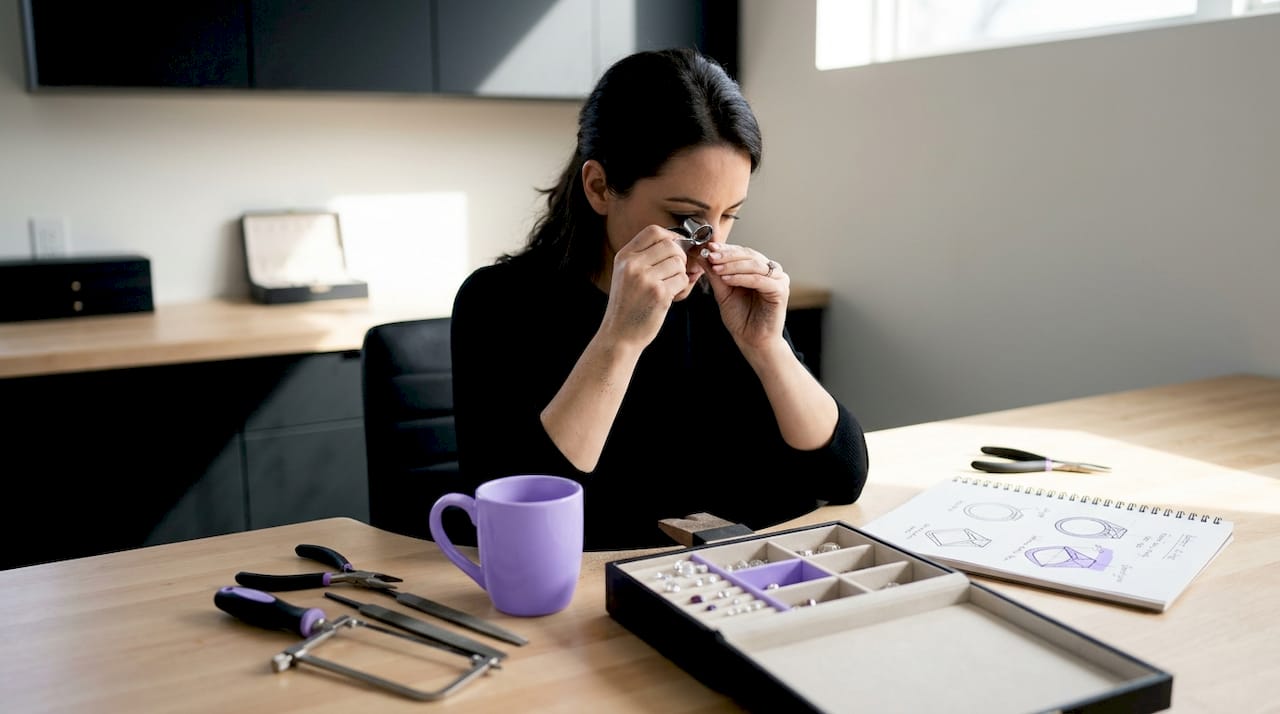
Not every diamond on a jeweler’s shelf was pulled from the earth. That assumption costs consumers billions of dollars a year and ties meaningful commemorative pieces to an industry with real ethical and environmental consequences. Today, a lab-grown diamond, a moissanite, or even a gem infused with DNA from a loved one’s hair can be just as visually stunning, far more affordable, and infinitely more personal. This article breaks down every major alternative, compares performance head to head, and shows you how to choose the gem that actually fits your values, your story, and your budget.
Table of Contents
Key Takeaways
Point | Details |
Ethical alternatives | Lab-grown diamonds and moissanite offer beautiful, responsible options without mining concerns. |
Quality and durability | Moissanite matches or exceeds diamond in brilliance and durability, while cubic zirconia is best for short-term fashion. |
Meaningful personalization | Modern gems allow for custom memorial and commemorative designs honoring your unique story. |
Smart budgeting | Many alternatives deliver exceptional value, letting you choose stones that fit both your values and wallet. |
Why look beyond traditional diamonds?
The motivation to move away from mined diamonds is no longer fringe thinking. It has become the mainstream conversation in ethical jewelry circles, and for good reason. Traditional diamond mining is one of the most disruptive extraction industries on the planet. A single carat of mined diamond displaces roughly 250 tons of earth, creates toxic runoff, and often comes from regions where labor practices are difficult to verify regardless of certification claims. For eco-conscious buyers, that paper trail is simply not enough.
Ethical sourcing has pushed the rise of lab-created gems from a niche product to a multibillion-dollar market segment. Lab-grown diamond prices dropped ~74% since 2020, which means the affordability gap between natural and lab alternatives has grown enormous. You can now get a visually identical stone for a fraction of the price.
Beyond cost and ethics, there is a third driver that matters enormously for commemorative jewelry: personal meaning. A stone selected purely for carat weight or resale value says very little about the person who wears it. But a gem created around a story, a memory, or even biological material from someone you love? That is a different category of object entirely.
Environmental footprint: Lab-created and alternative gems require no land disruption and use significantly less water than mined diamonds.
Ethical supply chains: When a gem is grown in a controlled facility, you know exactly where it came from.
Personalization: Memorial jewelry ideas show how commemorative pieces can honor people, pets, and milestones with deep specificity.
Cost efficiency: Lower prices mean you can invest in setting quality, custom design, or a larger stone without blowing your budget.
“Choosing a gem is no longer just about beauty. It is about what that gem says about your values and the people you love.”
If you are ready to go deeper into the details before selecting a stone, exploring personal diamond tips can help you frame exactly what you want from your piece before you commit.
Core diamond alternatives: What are your options?
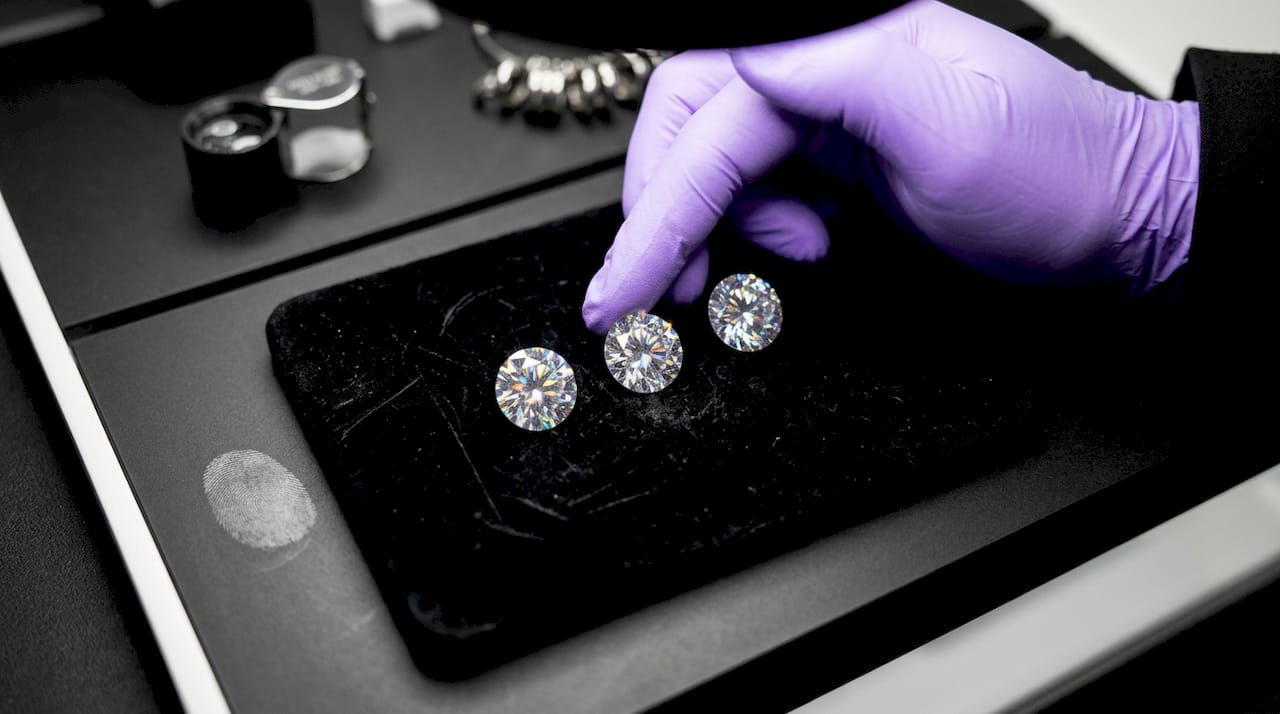
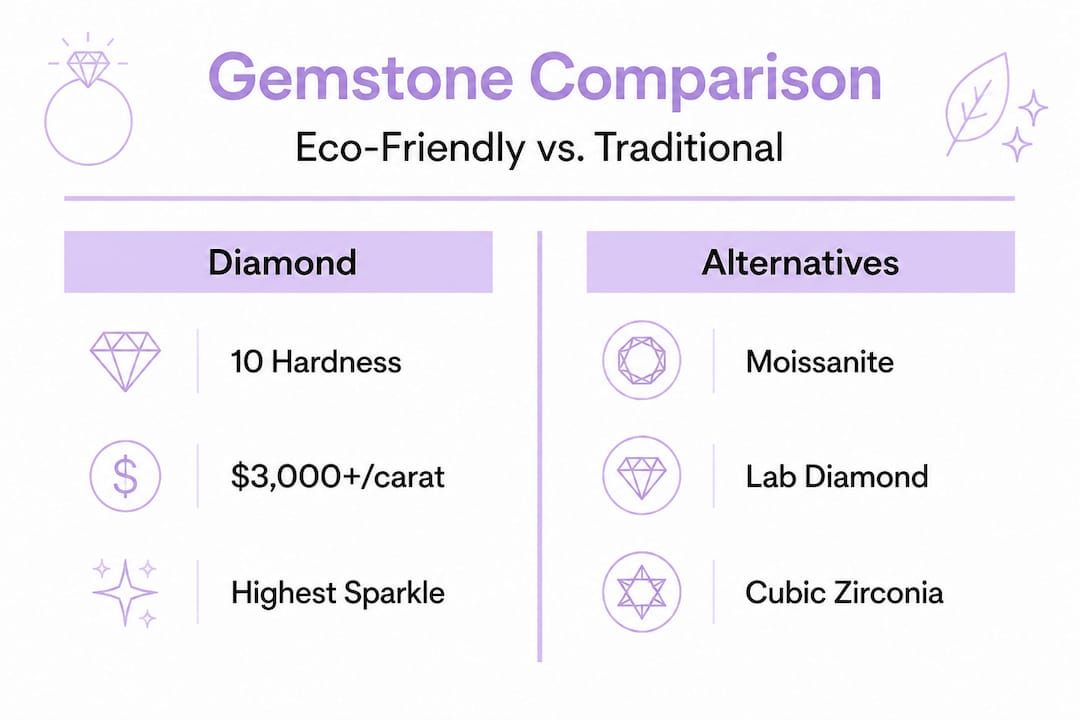
Three alternatives dominate the market right now: moissanite, lab-grown diamonds, and cubic zirconia. Each has a distinct origin, price point, and ideal use case. Understanding these differences is the single most important step before you spend a dollar.
1. Moissanite
Moissanite is a lab-created silicon carbide (SiC) crystal. Its refractive index sits at 2.65 to 2.69, which is higher than a natural diamond, meaning it bends and scatters light even more dramatically. That creates the distinctive rainbow flashes, known as fire, that moissanite fans love. With a Mohs hardness of 9.25, it is extremely durable for daily wear. Pricing typically runs from $300 to $600 per carat, compared to lab diamonds at $800 to $3,500 per carat.
2. Lab-grown diamonds
Lab-grown diamonds are chemically, physically, and optically identical to mined diamonds. They are made from carbon under either high-pressure high-temperature (HPHT) processes or chemical vapor deposition (CVD). The result is a real diamond, just without the mining. Prices have fallen dramatically, and resale value runs between 50 and 70 percent of original price, similar to mined diamonds, though both are lower than most consumers expect.
3. Cubic zirconia (CZ)
Cubic zirconia is a synthesized zirconium dioxide crystal. It is the cheapest option at roughly $20 to $50 per carat with a Mohs hardness between 8 and 8.5. It looks brilliant when new but clouds and scratches within 2 to 5 years, making it a poor choice for anything meant to last a generation.
Stone | Hardness (Mohs) | Price per carat | Longevity | Best for |
Natural diamond | 10 | $3,000 to $15,000+ | Lifetime | Traditional heirloom |
Lab-grown diamond | 10 | $800 to $3,500 | Lifetime | Ethical heirloom |
Moissanite | 9.25 | $300 to $600 | Lifetime | Budget heirloom, max sparkle |
Cubic zirconia | 8 to 8.5 | $20 to $50 | 2 to 5 years | Fashion jewelry |
Pro Tip: If you want to understand how cut, color, clarity, and carat interact differently in each stone type, reviewing diamond quality factors will help you ask the right questions when shopping.
The numbered decision path most buyers find helpful works like this:
Set your longevity intention. Is this an heirloom or a fashion piece?
Decide whether the “real diamond” label matters to you socially or sentimentally.
Compare sparkle style: the white brilliance of a lab diamond vs. the colored fire of moissanite.
Lock in your per-carat budget and match it to the table above.
For inspiration on how each stone type can be used in genuinely meaningful ways, diamond personalization examples walk through real commemorative designs that will likely reframe how you see these gems entirely.
How do diamond alternatives perform? Durability and sparkle compared
With definitions clear, the real question becomes: how do these stones actually hold up? Not on paper, but in daily life, on a ring worn every day, or in a pendant passed down through a family?
Hardness and scratch resistance
Hardness directly predicts how a stone survives everyday contact with surfaces. Lab-grown diamonds and natural diamonds both score a 10 on the Mohs scale, the highest achievable. Moissanite at 9.25 is remarkably close, and the practical difference in daily wear is minimal. Cubic zirconia at 8 to 8.5 sounds fine until you realize that common dust particles contain quartz, which scores a 7. That means CZ scratches just from regular environmental exposure over time.
Brilliance and fire
Brilliance refers to white light reflection. Fire refers to the dispersion of light into spectral colors. Diamonds and lab diamonds excel at brilliance. Moissanite, with its higher refractive index, actually exceeds diamonds in fire, producing those vivid rainbow flashes under direct light. Whether that is a pro or a con depends entirely on personal taste. Some buyers find it breathtaking. Others prefer the cooler, more restrained sparkle of a lab diamond.
Value and resale
Here is where expectations need calibrating. No alternative gem holds value the way gold or real estate does. Lab-grown diamond resale sits at 50 to 70 percent maximum of purchase price, and often less. Moissanite resale is similarly modest. Cubic zirconia has essentially no resale value after a few years of wear. If you are buying for investment, none of these alternatives serve that goal well. If you are buying for meaning, beauty, and daily joy, they are exceptional.
Practical use summary:
Lab-grown diamond: Best for buyers who want a real diamond at lower cost. Ideal for engagement rings and multi-generational personalized memorial jewels.
Moissanite: Best for maximum sparkle per dollar. Outstanding for statement rings, anniversary pieces, and anyone who loves dramatic light play.
Cubic zirconia: Best for fashion accessories, temporary pieces, or budget gifts where longevity is not the goal.
A useful statistic to keep in mind: moissanite delivers roughly twice the fire of a comparable diamond at less than half the price per carat. For commemorative pieces where emotional impact matters more than resale, that math is hard to argue with.
Choosing the right gem for your values and style
Now that you understand how each stone performs, the real work is matching your gem choice to your actual values. This is where most buyers skip steps and end up slightly disappointed.
Step-by-step selection process:
Clarify your eco commitment. If minimizing environmental impact is your primary driver, any lab-created stone serves that goal. Lab diamonds and moissanite both require no mining.
Define your ethical priorities. Do you want a fully traceable stone? Lab-created gems offer that by default. Do you care about the conditions under which the stone was made? Look for certifications from reputable labs.
Consider the narrative of the piece. What story should this gem tell? A memorial piece for a parent might prioritize timeless beauty, pointing toward a lab diamond. A celebration of a personal milestone might embrace moissanite’s vibrant fire.
Decide on personalization level. Standard lab stones are beautiful, but the most meaningful commemorative jewelry goes further. Personalizing your gem with DNA from hair or nails, for example, transforms it from a beautiful object into an irreplaceable keepsake.
For commemorative and memorial applications specifically, moissanite offers best value for size and sparkle, while lab diamonds carry the social weight of being a “real diamond” if that matters to the recipient. A detailed personalized memorial diamond guide can help you navigate those nuances before placing a commission.
Pro Tip: If you are creating a piece to honor someone who has passed, think about what they valued most in life. A person who loved boldness might love moissanite’s fire. Someone refined and understated might be better honored by the quieter brilliance of a lab diamond.
Red flags to watch for:
Any seller who refuses to provide a grading report or certificate of origin for a lab gem.
“Diamond alternative” listings that don’t specify the material. Vague labeling often means cubic zirconia priced like moissanite.
Claims of high resale value on any alternative stone. That claim is almost always misleading.
Pressure to buy a natural mined diamond because “nothing else is real.” Lab diamonds are chemically real diamonds. Full stop.
If you want to understand the actual process of building a meaningful piece from scratch, the article on how to create a sentimental diamond with DNA infusion explains what the creation process feels like from a buyer’s perspective.
Our perspective: Why the best gem is the one that tells your story
We have worked with enough families, partners, and individuals to say this with real confidence: the chemistry of a gem matters far less than most people think, and the story behind it matters far more than most people realize.
The jewelry industry has spent decades convincing consumers that value lives in rarity and resale. But for commemorative and memorial jewelry, that framework is completely backward. A two-carat natural diamond sitting in a generic setting tells you almost nothing about the person who wore it. A moissanite infused with DNA from a loved one’s hair, set in a design that reflects their personality, tells you everything.
This is not just sentiment. It is a practical observation about how people actually relate to heirloom objects over time. The pieces that get passed down with stories attached carry more weight than the pieces passed down with appraisal documents. Gem chemistry fades in memory. Meaning does not.
We also believe that the ethical dimension of gem choice is increasingly non-negotiable for younger buyers, and that this is a healthy shift. Choosing a lab-grown or alternative gem is not settling. It is a deliberate act of aligning your purchase with your values, and that act itself becomes part of the gem’s story.
The frontier we find most exciting is personalized diamond gifting that incorporates biological material, creating something that is scientifically traceable to a specific person. That is not a trend. That is the future of meaningful jewelry.
Our challenge to you: before you choose a stone based on what looks impressive in a display case, ask yourself what story you want it to tell in 50 years.
Create your meaningful, ethical jewelry with Shineternity
You have the knowledge. Now comes the part where you put it to use. At Shineternity, we specialize in creating gems that go beyond beautiful. Our process infuses DNA extracted from hair or nails directly into a finished diamond, and the entire process takes just two hours.
Whether you are designing a memorial piece to honor someone irreplaceable or creating a personalized gift that no one else on earth could duplicate, we are here to help you get it exactly right. Explore the Memorial Brilliance Diamond for commemorative options, browse our custom jewelry design services to see how far personalization can go, or visit the Shineternity site to learn more about our full range of meaningful, ethical gem creation. Your story deserves a gem built around it.
Frequently asked questions
Are lab-grown diamonds real diamonds?
Yes, lab-grown diamonds are chemically and physically identical to mined diamonds, just produced without environmental destruction or murky supply chains.
Is moissanite better than diamond?
Moissanite delivers superior fire and brilliance at a significantly lower price, but whether it is “better” depends entirely on the look you want and the values you are honoring.
How long does cubic zirconia last?
Cubic zirconia typically clouds and scratches within 2 to 5 years of regular wear, which makes it unsuitable for any piece meant to last or be passed down.
Are diamond alternatives good for heirloom jewelry?
Lab diamonds and moissanite are both highly durable for daily wear and make excellent heirloom stones, while cubic zirconia is suitable for fashion only.
Recommended
Comments