Bespoke Diamonds: Luxury, Personal DNA & Legacy

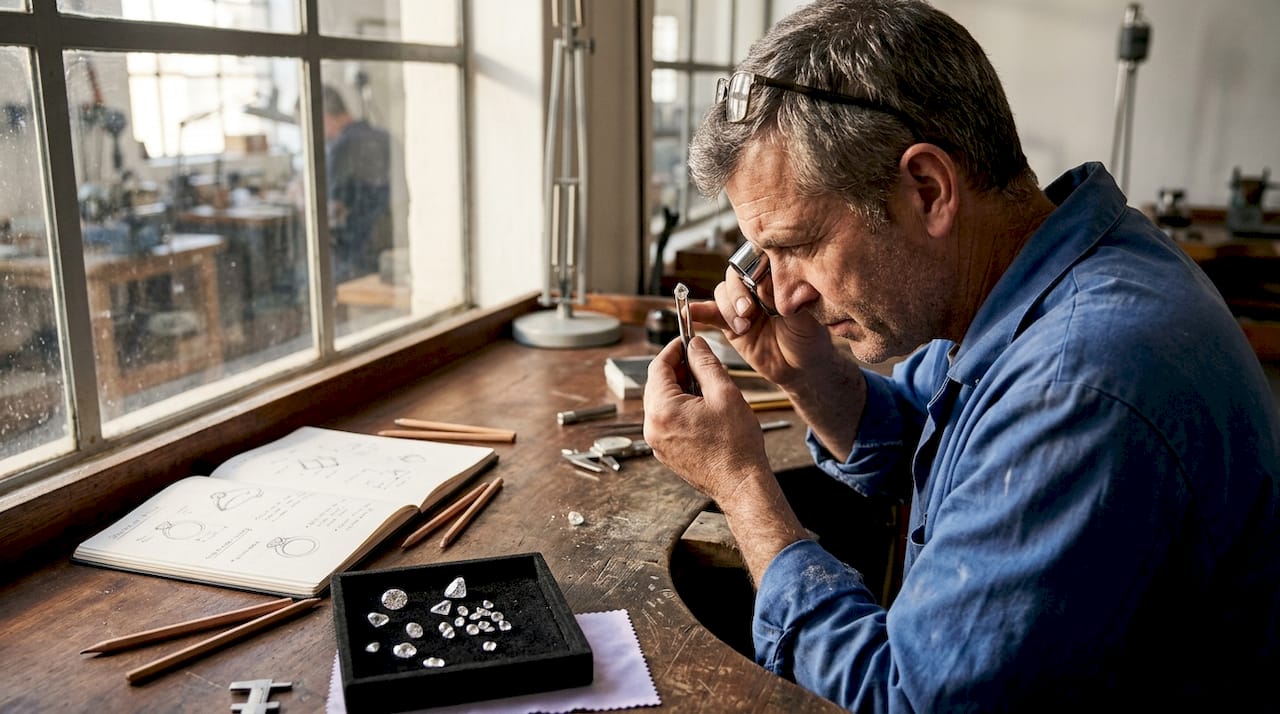
Most people assume a bespoke diamond is simply a ring with a custom engraving or a stone picked from a catalog. That assumption misses the point entirely. True bespoke diamonds are engineered from zero, shaped by your personal narrative, and in the most extraordinary cases, infused with DNA extracted from your own hair or nails. The result is a piece that carries scientific precision, artistic mastery, and deeply personal meaning in a single stone. This article walks you through what separates genuine bespoke creation from ordinary customization, how DNA integration works, what it means for legacy and investment value, and exactly how the process unfolds.
Table of Contents
Key Takeaways
Point | Details |
Bespoke diamond defined | A bespoke diamond is fully custom-designed and engineered from scratch for a specific client. |
DNA integration | Memorial diamonds can incorporate symbolic carbon from personal DNA, creating unique legacy pieces. |
Investment-grade criteria | Cut, clarity, and certified provenance are key factors for investment and legacy value. |
Process and timeframe | Creating a bespoke diamond involves consultation, design, engineering, and takes several weeks to months. |
Emotional and asset value | Bespoke diamonds unite emotional memorialization with discreet wealth and legacy display. |
What makes a diamond truly bespoke?
The word “bespoke” gets used loosely in luxury retail. A jeweler offering three setting options and four metal colors is not offering a bespoke experience. True bespoke begins with nothing. No template. No starting point borrowed from a catalog. Every structural decision, from the prong geometry to the girdle thickness, is made specifically for you.
“Bespoke diamonds refer to diamonds incorporated into fully custom-designed jewelry pieces, with zero-base design and intricate engineering and integration of the stone with the setting tailored to the wearer’s hand, lifestyle, and preferences.”
This distinction matters because the engineering and the stone are not treated as separate decisions. In a true bespoke piece, the stone selection and the setting design happen in conversation with each other. A cushion-cut stone with exceptional depth will demand a setting geometry that lets light move through it differently than a shallow brilliant cut would. That kind of thinking is built into bespoke luxury with personal DNA from the first consultation.
True bespoke vs. catalog customization
Feature | True bespoke | Catalog customization |
Design origin | Zero-based, client-specific | Pre-existing template |
Engineering | Custom CAD and structural planning | Minimal modification |
Stone and setting relationship | Designed together | Stone fits existing setting |
Personal narrative | Fully embedded | Limited or absent |
Timeline | Weeks to months | Days to weeks |
The core features of a true bespoke diamond piece go well beyond material quality:
Personal narrative: The piece reflects a specific story, relationship, or memory
Precision engineering: CAD modeling and structural analysis are completed before a single tool touches metal
Luxury material selection: Metals, stones, and finishes are chosen for the individual, not for inventory efficiency
Artisan execution: Master craftspeople build the piece by hand, guided by the engineered plan
DNA or biometric integration: In the most personal pieces, biological material contributes symbolic carbon to the stone itself
Using the DNA tribute checklist before your consultation ensures you arrive prepared to make every one of these decisions with confidence.
Personal DNA and memorialization: The new frontier
The idea of carrying a loved one with you, literally, is no longer metaphorical. Bespoke memorial diamonds now make it possible to extract carbon from hair or nail samples and incorporate that carbon symbolically into the diamond growth process. The finished stone is a real diamond. It is not a resin keepsake or a glass imitation.
An important clarification worth understanding: as investment-grade diamond disclosures note, no biological material is retained in the final stone. The DNA contributes symbolic carbon during synthesis. What you receive is a certified diamond, not a biological artifact. That distinction is what makes these stones wearable, certifiable, and investable.
Here is how the memorial diamond creation process works:
Private consultation: You discuss the intended memorial, the recipient, and the design vision with a specialist
DNA collection: Hair or nail samples are collected, typically requiring only a small amount
Carbon extraction and lab synthesis: Carbon is extracted and used in the high-pressure, high-temperature or chemical vapor deposition growth process
Certification: The finished stone is submitted to a recognized grading laboratory
Setting and delivery: The certified stone is placed in the bespoke setting and delivered with full documentation
For those exploring personalized luxury with DNA, the emotional weight of this process is often described as transformative. A memorial gem creation is not just a purchase. It is a permanent act of remembrance.
DNA diamond certification overview
Certification body | What it grades | Traceability provided |
GIA | Cut, color, clarity, carat | Yes, with report number |
IGI | Cut, color, clarity, carat | Yes, with digital record |
Independent appraisal | Market value | Supplementary only |
Pro Tip: Always request the full grading certificate, provenance documentation, and a written record of the DNA source material before finalizing any memorial diamond commission. These documents protect both the emotional and financial value of your piece. If you want to memorialize loved ones with absolute confidence, documentation is non-negotiable.
Investment value of bespoke diamonds: Legacy and asset
Bespoke diamonds occupy a unique position in the wealth conversation. They are not purely financial instruments, and they are not purely sentimental objects. They exist at the intersection of both, which is exactly why high net worth individuals find them compelling.
The investment-grade diamond framework prioritizes cut quality, clarity grade, and provenance documentation over whether a stone is natural or lab-grown. This is a critical insight. A poorly documented natural diamond holds less investment value than a well-certified lab-grown stone with clear traceability. Certification and provenance are the real drivers of long-term value.
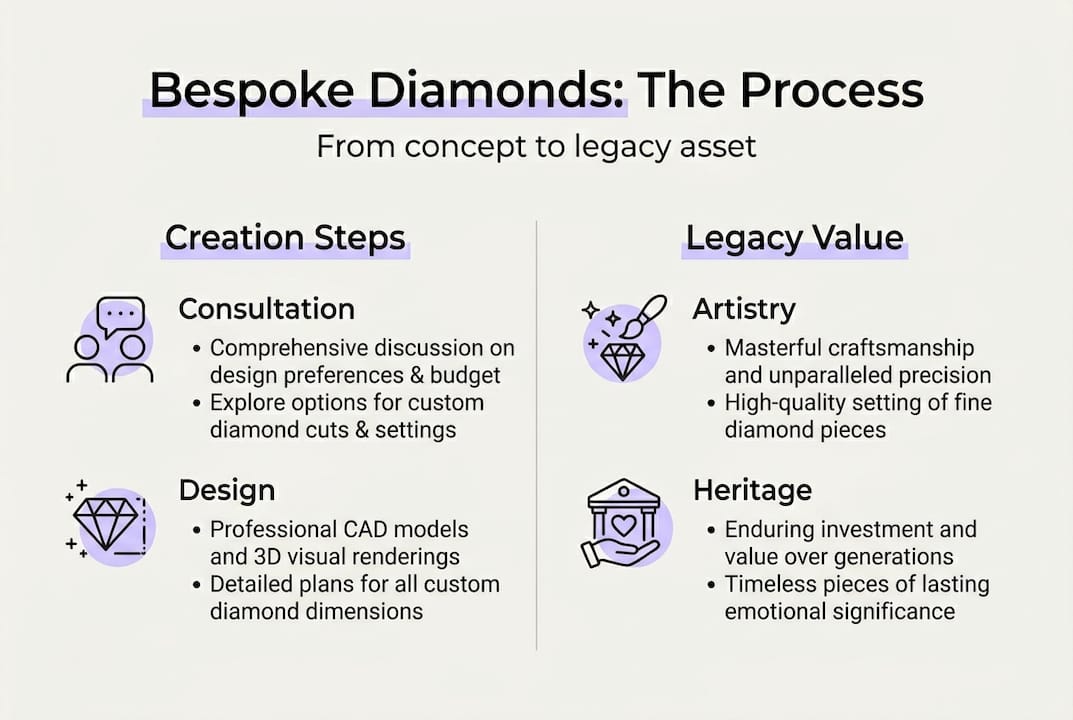
Natural diamonds generally hold stronger resale value than lab-grown stones in the open market, largely due to supply dynamics. Lab-grown memorial diamonds, however, offer something natural stones cannot: a verifiable personal connection. That connection creates a different kind of value, one that is not easily priced on a secondary market but is deeply felt by the people who matter most.
Many bespoke memorial diamonds are certified by GIA or IGI, giving them the documentation foundation required for estate planning, insurance, and eventual transfer to heirs. Understanding diamond quality factors before commissioning ensures you make decisions that protect both the emotional and financial dimensions of the piece.
The legacy value of a bespoke diamond extends well beyond resale:
Quiet wealth display: A bespoke piece signals taste and resources without ostentation
Emotional asset: The stone carries a story that appreciates in personal meaning over generations
Estate value: Certified stones with full provenance transfer cleanly within estate planning frameworks
Heirloom potential: Diamond personalization examples show how these pieces become family anchors across generations
The stepwise diamond creation process ensures every decision made during commission supports both the artistic and the financial integrity of the final piece.
The bespoke diamond process: From consultation to creation
Knowing that a bespoke diamond involves extraordinary craftsmanship is one thing. Understanding exactly how that process unfolds gives you the clarity to commission with confidence rather than anxiety.
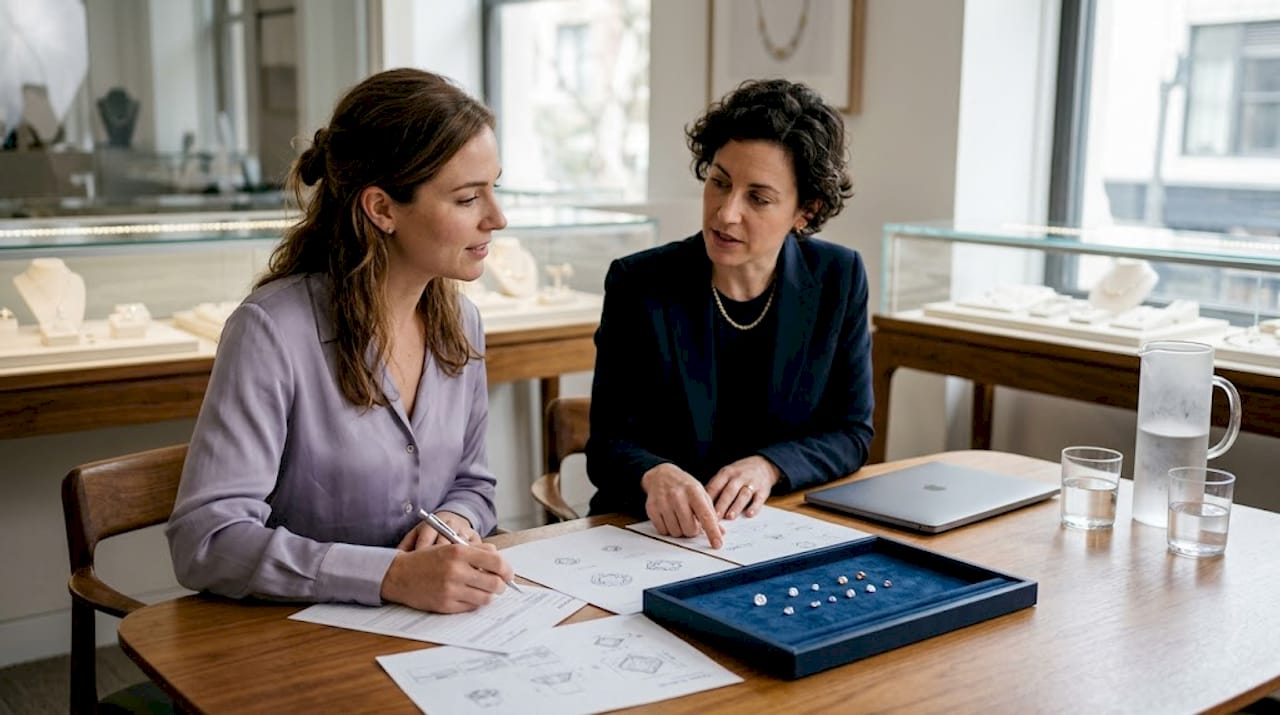
The bespoke jewelry timeline typically runs from several weeks to several months, with cost driven by complexity rather than by any single label or brand name. A more intricate design with rare materials and DNA integration will take longer and cost more than a simpler commission. That is not a flaw in the process. It is the point.
Here is the bespoke journey as it unfolds for luxury clients:
Private consultation: Design intent, personal narrative, lifestyle, and budget are discussed in full
Concept development: Initial sketches and mood references are reviewed and refined
CAD modeling: A precise three-dimensional model is built, allowing you to approve proportions before any material is committed
Stone selection: Stones are sourced and evaluated against the approved design, not the other way around
Engineering review: Structural integrity, wearability, and setting mechanics are confirmed
Artisan fabrication: Master craftspeople build the piece by hand from the engineered plan
Certification and delivery: The finished piece is certified, documented, and delivered with full provenance records
Pro Tip: Build extra time into your planning horizon. The DNA tribute checklist helps you prepare every detail in advance, which reduces delays and ensures the final piece reflects exactly what you envisioned. Rushing a bespoke commission is the only real mistake you can make in this process.
A fresh perspective: Why true bespoke diamonds matter more than ever
There is a tendency in luxury markets to treat bespoke as a premium tier of the same product. It is not. True bespoke diamonds are a fundamentally different category of object.
Some view these pieces as emotional luxury, while others see them as a strategic asset for quiet wealth display. Both views are correct, and neither one captures the full picture on its own.
“For high net worth individuals, bespoke diamonds combine design, memorial, legacy, and asset value in a single object that no catalog piece can replicate.”
The real value is not in the rarity of the stone. It is in the irreproducibility of the story. A natural diamond from a famous mine can be appraised, compared, and replaced. A bespoke luxury diamond built around your DNA, your narrative, and your specific design cannot be replicated by anyone. That is a different kind of scarcity entirely, and it is the kind that matters most to people who have already acquired everything else.
Connect with bespoke diamond expertise
Understanding the depth of true bespoke creation is the first step. The next is working with specialists who can translate your personal narrative into a certified, wearable legacy.
At Shinlabz, we infuse DNA extracted from hair or nails directly into a finished diamond, and the entire process takes just two hours. Whether you are creating a memorial piece, a legacy gift, or a statement of quiet personal wealth, our team handles every detail from first consultation to final certification. Explore our elegant diamond accessories, review our custom jewelry design services, and book your private consultation to begin the conversation.
Frequently asked questions
What is the difference between bespoke and customized diamonds?
Bespoke diamonds are created from scratch with zero-base design and custom engineering for each individual client, while customization typically means selecting options within a pre-existing design framework.
Is DNA actually integrated into bespoke memorial diamonds?
Yes, but with an important nuance: the DNA contributes symbolic carbon to the stone during synthesis, and no biological material is retained in the finished diamond.
How long does it take to create a bespoke diamond?
The design and fabrication process runs several weeks to months depending on design complexity, stone sourcing, and whether DNA integration is included.
Are bespoke diamonds a good investment?
Bespoke diamonds carry strong legacy and emotional value, and their financial worth depends on cut, clarity, and provenance documentation rather than simply whether the stone is natural or lab-grown.
What documentation should buyers request for bespoke diamonds?
Always request GIA or IGI grading certificates, full traceability records, and provenance documentation. These GIA and IGI certifications are essential for insurance, estate planning, and eventual transfer to heirs.
Recommended
Comments