Commissioning Custom Diamonds: A Step-by-Step Guide


Luxury once meant acquiring the rarest, most expensive version of something everyone else wanted. That era is fading. Today’s most discerning collectors are commissioning pieces that carry personal weight — not just market weight. A custom diamond infused with DNA material from hair or nails sits at the intersection of scientific artistry and deeply private meaning. It outlasts trends, appreciates with provenance, and tells a story no retailer can replicate. This guide walks you through every phase of the commissioning process, from initial consultation to final appraisal, so you can make confident decisions at each milestone.
Table of Contents
Key Takeaways
Point | Details |
Client control at each stage | Milestone approvals let you shape every detail, keeping the process private and personalized. |
Certified ethical choices | GIA and IGI certification plus ethical sourcing ensure both value and peace of mind. |
DNA diamonds deepen meaning | Using DNA-derived carbon makes your diamond both unique and emotionally significant. |
Provenance boosts lasting value | Detailed documentation and heritage records help preserve your diamond’s worth for generations. |
Prepare for timelines and fees | Expect longer timeframes and milestone-based deposits for truly bespoke results. |
Understanding the custom diamond commissioning process
The custom diamond journey is not a transaction. It is a structured collaboration between you, a master jeweler, and in some cases, a gemological laboratory. Understanding each phase prevents costly misunderstandings and ensures the finished piece reflects exactly what you envisioned.
The process generally unfolds in this order:
Initial consultation — You share your vision, including style preferences, symbolic intent, and budget parameters. Jewelers specializing in HNW clients conduct these meetings with full confidentiality.
Diamond selection — You choose the stone based on the 4Cs (cut, color, clarity, and carat weight), certification source, and ethical origin. This step often involves private viewings.
Design sketches and CAD approval — Your jeweler translates inspiration into 2D sketches, then into a 3D computer-aided design (CAD). You approve this before fabrication begins.
Wax model review — A physical wax prototype lets you feel scale, proportion, and weight before any metal is cast.
Casting, setting, and polishing — The piece is fabricated, the diamond is set, and final finishing is applied.
Appraisal and documentation — An independent appraiser certifies the piece’s value, and full documentation is prepared.
The stepwise diamond creation process is designed to keep you in control at every decision point. As noted in bespoke jewelry commissions, the milestone-driven approach is specifically built to protect client privacy and ensure satisfaction before any irreversible step is taken.
Phase | Client Action Required | Typical Duration |
Consultation | Approve brief | 1-2 weeks |
Diamond selection | Confirm stone | 1-3 weeks |
CAD design | Sign-off required | 2-4 weeks |
Wax model | Physical approval | 1 week |
Fabrication | None | 2-4 weeks |
Appraisal | Receive documentation | 1 week |
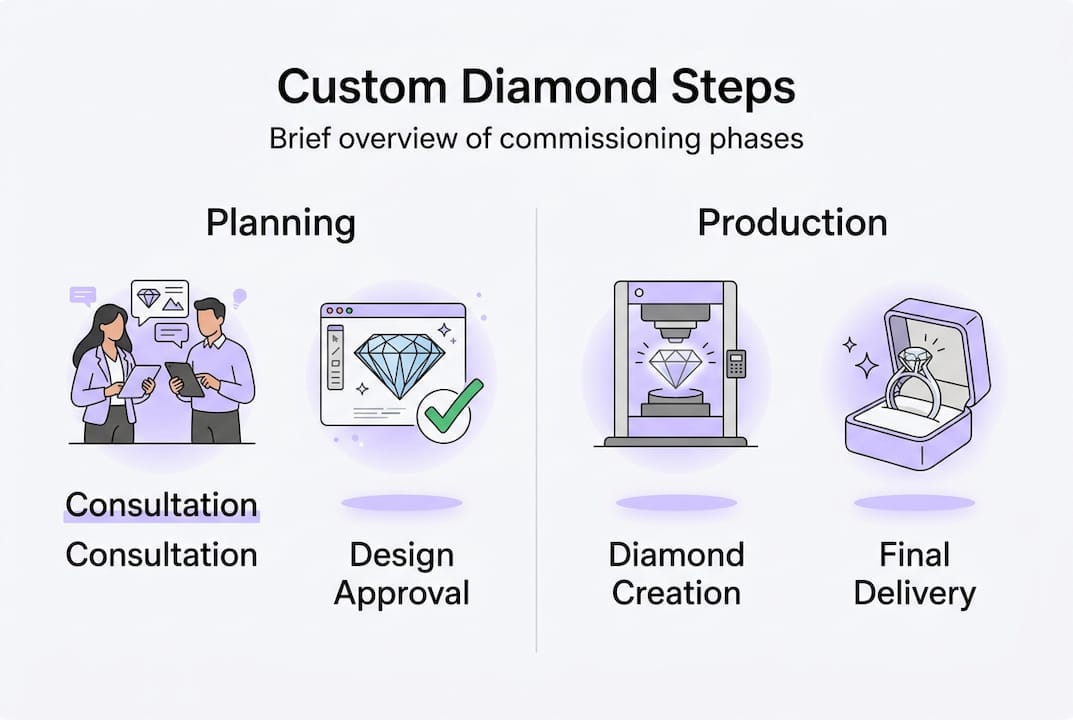
The custom jewelry design process, when handled properly, gives you veto power at every stage. The standard custom diamond process, including 4Cs certification and CAD approval, protects both your investment and your creative vision.
Pro Tip: Request a signed milestone agreement before work begins. Each approved stage should be documented in writing, including photographs of the wax model and CAD renders. This paperwork directly supports insurance, resale, and estate valuation.
Selecting your diamond: certified, ethical, lab-grown, or natural
Once you understand the end-to-end process, the next crucial decision is selecting the diamond itself. This choice carries both financial and ethical weight, and the options are more nuanced than most buyers realize.
Certification matters more than most clients expect. Not all grading labs apply the same rigor. GIA (Gemological Institute of America) is widely regarded as the strictest, applying consistent grading criteria across cut, color, clarity, and carat. IGI (International Gemological Institute) is reputable and increasingly used for lab-grown stones. Other labs may apply more lenient standards, which inflates perceived quality on paper. For HNW portfolios, insisting on diamond certification standards from GIA or IGI protects long-term value.
Ethical sourcing is no longer optional at the top of the market. The Kimberley Process Certification Scheme was established to prevent conflict diamonds from entering the supply chain. While it has gaps, reputable jewelers go beyond it by providing country-of-origin documentation and sometimes direct mine relationships.
Natural vs. lab-grown: a portfolio-level decision.
Natural diamonds carry geological rarity and traditional prestige
Lab-grown diamonds are 30-40% less expensive at comparable grades
Lab-grown stones are chemically and physically identical to natural diamonds
For DNA-infused diamonds, lab-grown is the only viable technology
Rare natural gems (colored diamonds, specific origins) offer speculative upside
Factor | Natural Diamond | Lab-Grown Diamond |
Price premium | High | 30-40% lower |
Certification | GIA, IGI | IGI preferred |
Ethical sourcing | Kimberley Process | No mining required |
DNA infusion capability | No | Yes |
Rarity appeal | Geological | Controlled |
For clients interested in the DNA diamond creation guide, diamond selection priorities should include confirming the lab’s ability to work with infused carbon material. Some jewelers offer private sourcing relationships that provide access to stones not available through standard wholesale channels. Ask specifically about these options during your consultation.
Infusing personal meaning: commissioning diamonds with DNA elements
With your diamond chosen, the next frontier is infusing it with personal meaning through DNA elements. This process sounds almost mythological, but the science is precise and the results are verifiably real.
The HPHT (High Pressure High Temperature) process is the foundation of DNA-infused diamond creation. Here is how it works:
Carbon extraction — Carbon is extracted and purified from a biological source such as hair or nails. This is the starting material, not a digital encoding of genetic information.
Seed preparation — A small diamond seed crystal is prepared to initiate growth.
Growth chamber — The purified carbon is placed in a growth chamber with the seed and subjected to extreme pressure and temperature conditions that replicate natural diamond formation.
Cutting and polishing — The raw diamond crystal is cut and polished to your specified shape and grade.
Certification and documentation — The finished stone receives individual documentation noting its origin material and growth parameters.
“Lab-grown memorial diamonds are chemically identical to natural diamonds, with individual documentation that records each stone’s unique origin and characteristics.”
As explained in memorial diamond technology, these are real diamonds, not simulations. The HPHT process uses carbon from biological material to grow the stone, which is why the result is a genuine diamond with a traceable origin story.
Colors in DNA diamonds occur naturally from trace impurities in the carbon source. Blue tones can result from boron presence, while yellow hues suggest nitrogen. These color characteristics are part of each stone’s individual identity and are documented in the certification. Learn more about the emotional and scientific dimensions through this memorial diamond creation overview.
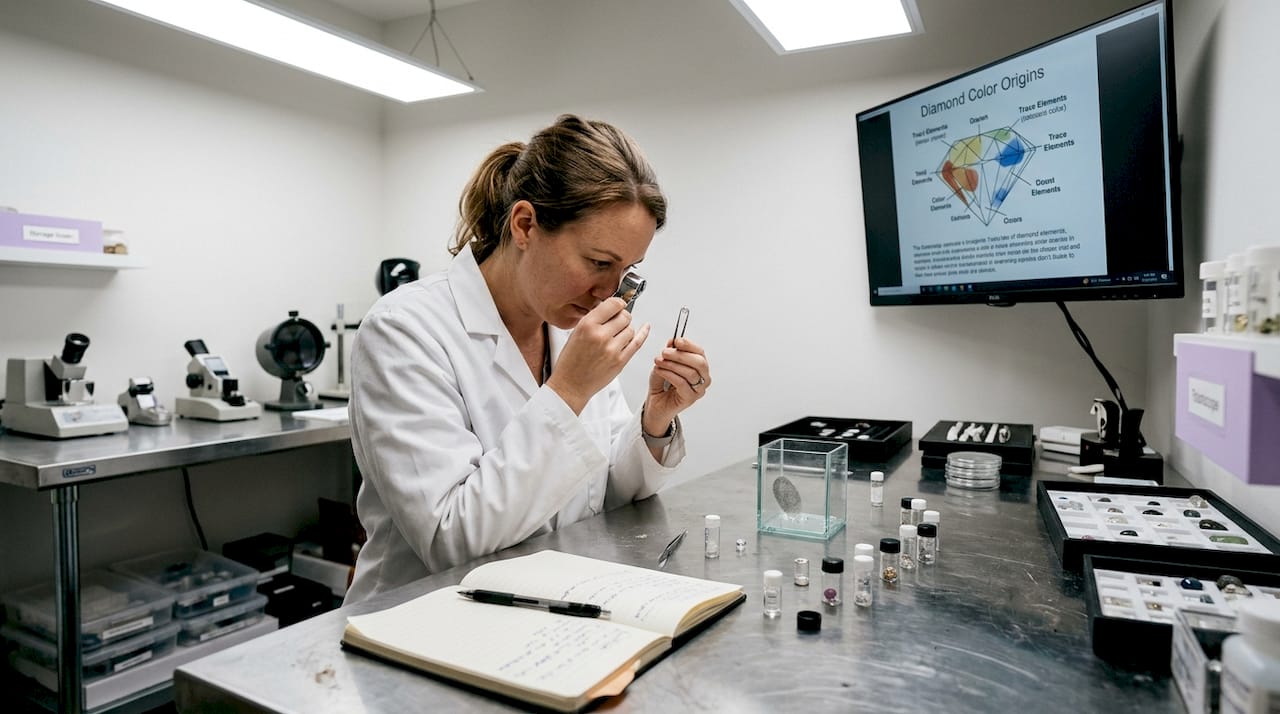
Pro Tip: Before commissioning, clarify what “DNA infusion” actually means with your jeweler. The diamond contains carbon derived from biological material, not an intact DNA sequence. Saint Diamonds confirm that these stones are genuine lab-grown diamonds documented individually — managing expectations around this distinction prevents disappointment and builds trust in the process. Also explore personal memorial jewelry options to understand how the finished piece can be set and presented.
Timelines, costs, and value preservation: what to expect
Having personalized your custom diamond, let’s clarify what you can expect in terms of timelines, costs, and lasting value. Surprises at this stage are avoidable with the right preparation.
Timeline overview:
Simple custom diamond ring (no DNA): 4-10 weeks from CAD approval
DNA-infused memorial diamond: 4-8 months from material submission
Complex settings with custom metalwork: add 2-4 weeks to either timeline
Delays most often occur at the diamond selection or CAD approval stages when client feedback is slow
Cost structure you should expect:
Deposit: 20-50% of total project cost, required at commission agreement
Design fee: 10-20% of total, sometimes credited toward final balance
Appraisal: $300-$800 for an independent certified appraisal
Insurance: Typically 1-2% of appraised value annually
As detailed in commissioning timelines, deposits are non-refundable after CAD design approval. This is standard practice because custom fabrication and material sourcing cannot be reversed. Plan accordingly.
Provenance is a financial asset, not just sentimental. Heritage provenance retains 93% value in economic downturns compared to 71% for pieces without documented history. That 22-point gap is significant at high valuations.
Benchmark | Standard Custom | DNA-Infused Diamond |
Timeline | 4-10 weeks | 4-8 months |
Deposit | 20-50% | 20-50% |
Design fee | 10-20% | 10-20% |
Provenance uplift | Moderate | High |
For ongoing inspiration in selecting and personalizing your stone, the custom diamond inspiration resource offers detailed examples of finished commissions and their documented histories.
Rethinking custom diamonds: what most luxury buyers miss
Most clients walk into a commission focused on the 4Cs. They research cut grades, debate clarity plots, and negotiate carat weight. These factors matter. But they are not what separates a piece that holds meaning for three generations from one that sits in a safe.
The real differentiator is provenance documentation. Not the certificate from the grading lab, but the full paper trail: the original consultation brief, the signed CAD approval, photographs of the wax model, and the origin documentation for the diamond itself. Heritage provenance retains significantly more value in economic downturns than pieces without detailed history, and that is a measurable financial reality, not sentiment.
The other misconception we encounter consistently is that DNA-infused diamonds are a gimmick. They are not. The carbon source changes nothing about the diamond’s physical or chemical properties. What it changes is the story, and the story is what creates irreplaceable value. A diamond grown from material connected to a person you loved cannot be replicated, repriced, or replaced by a competitor’s catalog. Explore more perspectives on this through deep memorial diamond inspiration.
Buyers who invest equal attention in documentation as in the diamond itself consistently report greater satisfaction and stronger valuations at estate review.
Next steps: commission your personalized diamond masterpiece
When you’re ready to move from intention to action, the right partner makes the entire process feel clear rather than overwhelming. Our approach centers on extracting DNA from hair or nails and infusing that carbon into a finished diamond, with the entire preparation process completed in just 2 hours.
Whether you’re drawn to the emotional significance of a memorial brilliance diamond or want to explore the full scope of possibilities through our commission custom jewelry design service, we guide you from initial consultation through final documentation. Every client receives milestone-by-milestone communication, transparent cost structures, and provenance paperwork that protects both the emotional and financial value of your commission for decades ahead.
Frequently asked questions
How long does it take to commission a custom diamond with DNA elements?
Memorial diamond creation typically takes 4-8 months because the HPHT carbon growth process requires precise conditions and cannot be accelerated without compromising quality.
Is a custom diamond from DNA truly unique and valuable?
Yes. These stones are real lab-grown diamonds individually documented with origin records, and provenance documentation can boost their appraised value by up to 120% over time.
What certifications should I request for a bespoke diamond?
Request GIA or IGI certification. GIA applies strictest grading standards and is universally recognized by insurers and estate evaluators, with IGI increasingly accepted for lab-grown stones.
Are deposits and costs refundable after approval?
No. Deposits of 20-50% are standard and become non-refundable once you sign off on the CAD design, because custom fabrication and sourcing cannot be reversed.
Will my custom diamond preserve its value over time?
Diamonds with full provenance documentation retain 93% of value in economic downturns compared to 71% for undocumented pieces, making provenance a core part of your investment strategy.
Recommended
Comments