Diamond Keepsake Explained: How Memorial Gems Become Heirlooms

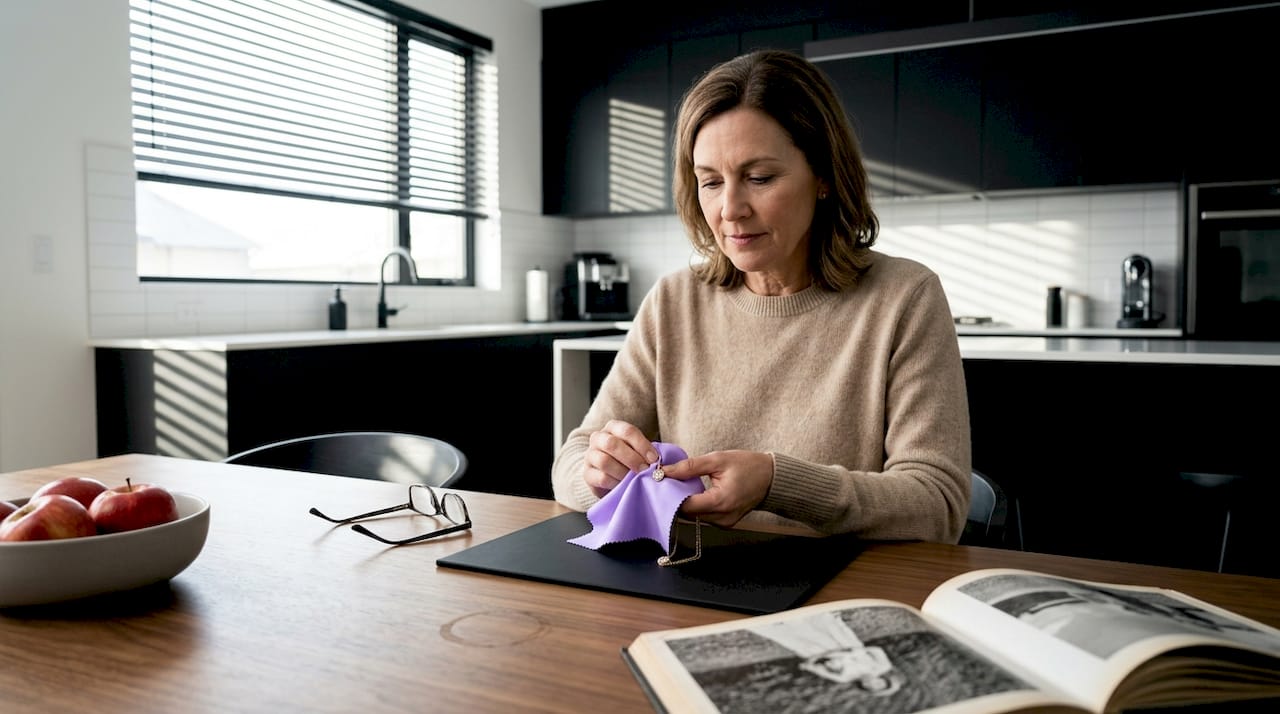
An urn on a mantle tells you someone is gone. A diamond on your finger tells a different story. Memorial diamonds, also called diamond keepsakes, are redefining what it means to hold someone close after they pass. Instead of storing ashes in a container tucked away in a corner, families are now wearing their loved ones as one of the hardest, most beautiful substances on Earth. This guide walks you through exactly what diamond keepsakes are, how they are made, what makes them so emotionally and physically extraordinary, and what you need to know before you choose this path for someone you love.
Table of Contents
Key Takeaways
Point | Details |
Personalized remembrance | Diamond keepsakes let you memorialize loved ones in a beautiful and lasting way. |
Scientific process | Advanced technology transforms ashes or DNA into real diamonds using HPHT methods. |
Heirloom durability | Memorial diamonds are as strong as mined gems and can be passed down for generations. |
Custom options | You can choose the size, color, certification, and engraving for a truly unique tribute. |
Considerations | Expect longer timelines and higher costs, but the emotional value is significant for many families. |
What is a diamond keepsake?
A diamond keepsake is a lab-grown diamond created from the carbon found in cremated ashes, hair, or material containing DNA. The finished stone looks, feels, and behaves exactly like any diamond you would buy in a jewelry store. The only difference is where the carbon came from and what it represents to the person wearing it.
You may have heard several terms used interchangeably. Memorial diamond, cremation diamond, ashes-to-diamond, and DNA diamond all refer to variations of the same concept. As a category, memorial diamonds are lab-grown diamonds created from carbon extracted from cremated ashes, hair, or DNA. The term you use often depends on the source material or the company providing the service, but the emotional intention behind all of them is identical: turning what remains into something that endures.
Traditional keepsakes have their place. Urns, memorial glass, resin inclusions, and shadow boxes all serve meaningful purposes. But they sit on shelves or in cabinets. They are objects you visit rather than carry. A diamond keepsake is fundamentally different because it goes where you go. It can be set into a ring worn every day, a pendant that rests against your heart, or earrings that catch the light at a celebration. It becomes part of your life rather than a monument to loss.
The materials used to create these gems vary, and each carries its own significance:
Cremated ashes: The most common starting point. Roughly half a cup of ashes provides enough carbon to begin the process.
Hair: A lock of hair can work on its own or alongside ashes. Some families preserve hair clippings specifically for this purpose.
Nail clippings: Keratin-rich material like nails also contains carbon that can be extracted and used.
Combined samples: Some providers accept a combination of ashes and hair to ensure sufficient carbon yield.
Pet remains: Many families choose to memorialize beloved animals using the same process.
“Wearing a diamond made from someone’s ashes feels completely different from anything I expected. It does not feel morbid. It feels like they are still with me.” — A sentiment shared by countless families who have chosen this form of memorializing loved ones in a truly personal way.
The emotional power of a diamond keepsake comes partly from its permanence. Diamonds do not fade, chip easily, or deteriorate over centuries. The person you are honoring is, in a very real sense, transformed into something that will outlast everyone in your family tree.
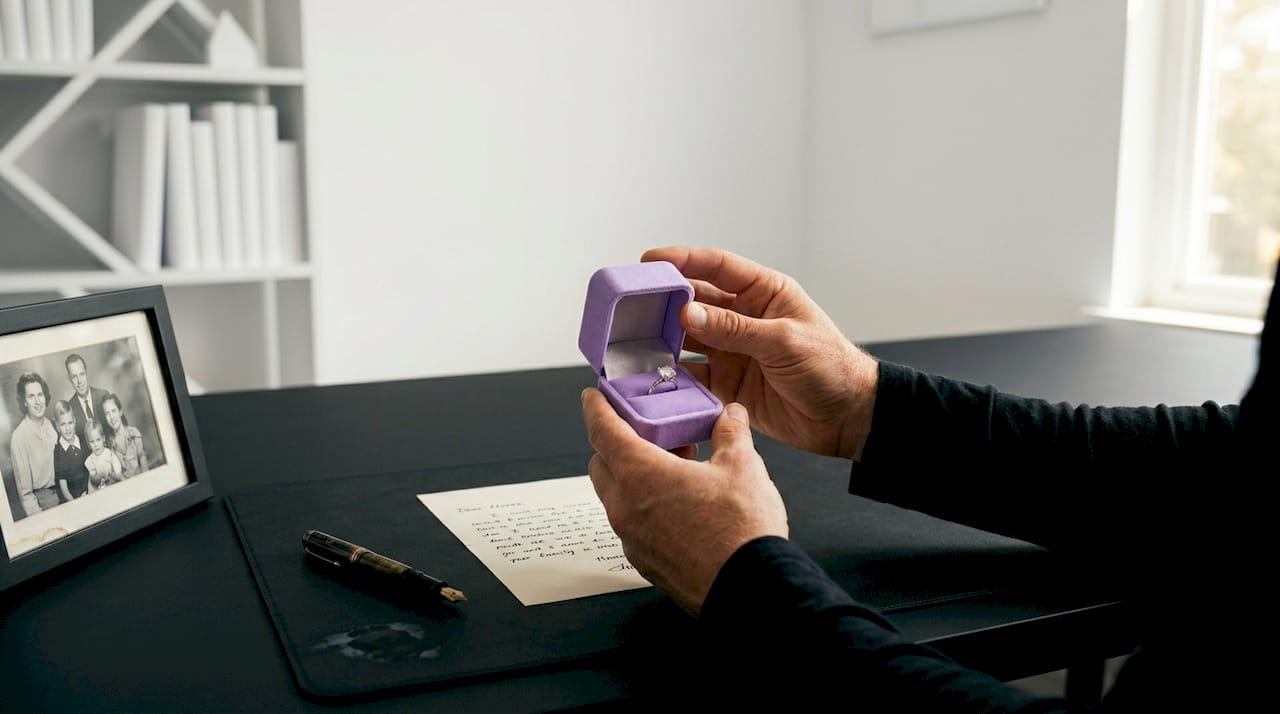
How are diamond keepsakes made?
After understanding what memorial diamonds are, the next logical step is to explore exactly how they are created. The process is more precise than most people expect, and knowing the details helps families feel confident about what they are entrusting to a provider.
The core technology is called High Pressure High Temperature (HPHT), the same method used to create many lab-grown diamonds sold in jewelry stores today. Here is how the process unfolds from start to finish:
Sample submission: You send approximately half a cup of cremated ashes or a lock of hair. The material is carefully logged and handled under documented protocols to maintain the chain of custody.
Carbon extraction and purification: Technicians isolate the carbon from the sample and purify it into graphite form. This stage removes everything except the elemental carbon, bringing purity levels up to 99.9%.
Loading the HPHT chamber: The purified graphite is placed into a specialized chamber alongside a tiny diamond seed crystal, which acts as a template for growth.
Crystal growth: The chamber applies extreme heat and pressure that mirror the conditions deep inside the Earth. Over a period of 4 to 8 months, carbon atoms bond layer by layer around the seed crystal, building a rough diamond.
Cutting and polishing: A skilled gem cutter shapes the rough stone into your chosen cut, such as round, cushion, or princess. The stone is then polished to bring out its brilliance.
Certification: Optional but recommended, the finished diamond can be submitted for grading by GIA or IGI, giving you an official record of its characteristics.
Step | Approximate time | Key technical detail |
Carbon extraction | 1 to 2 weeks | Purified to 99.9% carbon |
HPHT crystal growth | 4 to 8 months | 60,000+ atmospheres of pressure |
Cutting and polishing | 2 to 4 weeks | Choice of cut, size, and shape |
Certification (optional) | 2 to 4 weeks | GIA or IGI grading report |
One point families often ask about: are there still traces of DNA or biological material inside the finished diamond? The answer is no. Because the process burns away everything except elemental carbon, the final gem has no biological tissue or DNA in it. What the stone carries is the pure carbon structure, the foundational building block of your loved one’s physical existence. Some providers market their offerings as “DNA diamonds,” but the term refers to the source of the carbon, not the presence of genetic material in the finished stone.
Pro Tip: When reviewing the diamond creation steps with any provider, ask for documentation at each stage. A reputable company will give you receipts, batch numbers, and chain-of-custody records so you always know your sample has not been mixed or mishandled. Also check out a dedicated DNA diamonds guide for a deeper look at how DNA-sourced options differ from traditional cremation diamonds.
What makes memorial diamonds unique?
Now that you know how diamond keepsakes are created, it is important to understand their unique features and advantages compared to other memorial options. This is where the science becomes genuinely surprising.
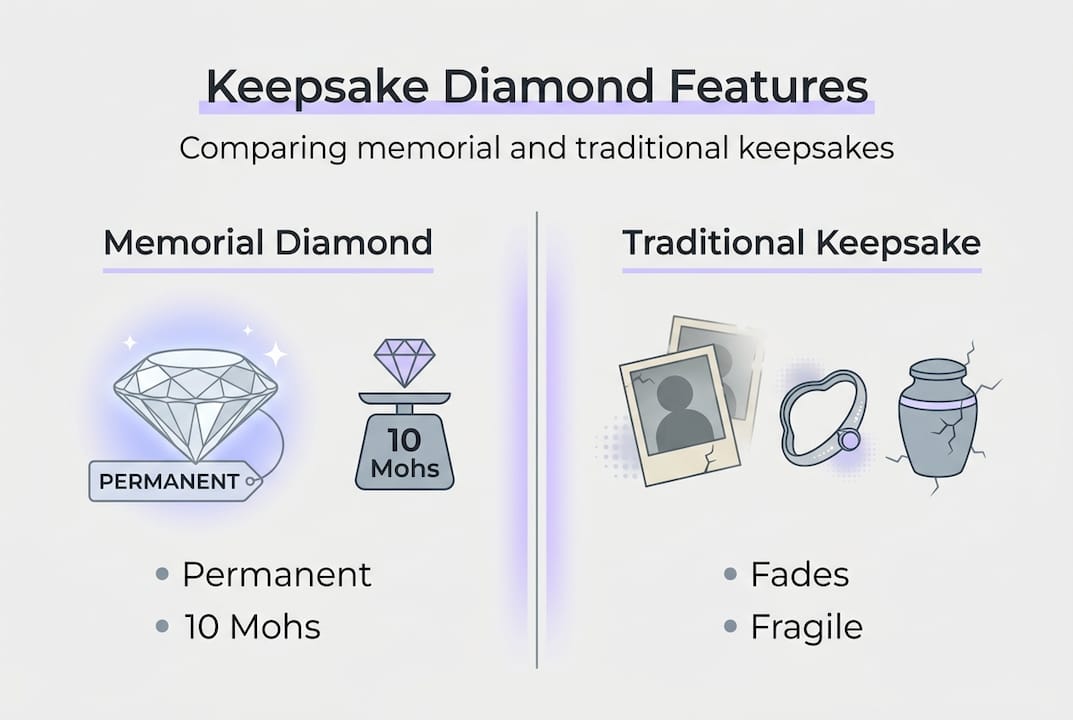
The carbon yield from ashes is actually quite low. Only 0.5 to 2% of cremated remains is usable carbon, yet technicians purify that tiny fraction to 99.9% purity to grow a diamond that is chemically and physically identical to any stone pulled from the ground. It scores 10 on the Mohs hardness scale, the highest rating possible. Compare that to glass keepsakes, which score around 5.5, or resin memorial objects, which can scratch, yellow with age, or crack under impact.
Color is one of the most interesting variables in memorial diamond creation. The trace elements present in each person’s ashes influence what color the diamond naturally grows toward. Yellow is the most accessible color because it results from nitrogen traces common in most ashes. Blue diamonds, which form when boron is present, are rarer and require more careful processing. Red memorial diamonds are the rarest and most expensive of all. Here is a quick breakdown of what matters most:
Yellow diamonds: Most common, most affordable, often the starting point for first-time buyers.
Colorless/white diamonds: Require additional purification steps to remove trace elements; priced accordingly.
Blue diamonds: Striking, rare, associated with boron in the carbon source; a popular choice for those wanting something visually distinctive.
Red diamonds: Extremely rare, command premium pricing, available from only a handful of providers worldwide.
Green and black diamonds: Niche options that some providers offer through specialized growing conditions.
One fact that consistently surprises families is that a single set of ashes can produce multiple diamonds from one sample, typically 4 to 6 stones, depending on the quantity submitted. This means siblings or other family members can each receive their own keepsake from the same loved one without needing separate samples. Old ashes that have been stored for years are still entirely viable, which is meaningful news for families who lost someone before this technology was widely available.
Feature | Memorial diamond | Resin keepsake | Glass memorial |
Durability | 10 Mohs (hardest possible) | 2 to 3 Mohs | 5 to 6 Mohs |
Wearable | Yes | Limited | Rarely |
Heirloom potential | Generations | Decades at best | Fragile |
Uniqueness | Chemically individual | Generic | Generic |
Average cost | $1,500 and up | $50 to $300 | $100 to $500 |
Pro Tip: If you care about resale value, provenance, or simply want a formal record, always ask your provider whether they offer GIA or IGI certification. A certified memories to gems stone carries documented proof of its characteristics, which also makes insurance coverage straightforward.
Practical considerations: costs, timing, and personalization
Beyond uniqueness, practical factors like investment, timing, and customization make a real difference for families considering this tribute.
Cost is often the first practical concern. Prices for memorial diamonds start at approximately $1,499 to $3,499 for smaller yellow stones, with the price climbing based on carat weight, color rarity, certification, and custom settings. A 0.5 carat diamond runs around $4,799 on average from established providers, while large, custom-colored, or certified stones can reach $75,000 or more. These are not impulse purchases, and they should not be. Thinking of the cost against decades of heirloom value reframes the number considerably.
Diamond spec | Estimated cost | Wait time | Certification available |
0.25 ct, yellow | $1,499 to $2,500 | 4 to 5 months | Optional |
0.5 ct, yellow | ~$4,799 | 5 to 6 months | Recommended |
1.0 ct, blue | $10,000 to $20,000 | 6 to 8 months | Strongly recommended |
1.5 ct+, custom color | $25,000 to $75,000+ | 7 to 8 months | Required by most labs |
The process typically takes 4 to 8 months from sample submission to the moment you receive a polished stone. That timeline also gives many families space for grief. There is something grounding about knowing a memorial is growing, forming, becoming, during the months after a loss.
Personalization is where the experience becomes truly yours. Here are the top questions to ask any provider before you commit:
What documentation will I receive at each stage of production?
Do you mix samples from multiple clients in the same growth chamber?
What color options are available from my specific sample?
Can I choose the cut, shape, and carat weight after seeing the rough stone?
Do you offer certified grading, and which labs do you work with?
What custom settings, engravings, or jewelry designs can you create around the finished stone?
What happens if the growth process needs to be restarted?
Beyond the stone itself, the setting transforms a diamond keepsake into memorial jewelry that fits your style and your story. Options include classic solitaire rings, bezel settings that protect the stone during daily wear, tension settings that let light pass through from every angle, and pendants crafted in gold, platinum, or rose gold. Engraving a name, date, or short message on the band adds another layer of personal meaning.
“A memorial diamond is not just a piece of jewelry. It is a decision to carry someone with you on your own terms, in your own style, for the rest of your life.” This perspective from families who have completed the process shapes everything about how we approach these conversations.
A new era in memorialization: perspective you won’t find elsewhere
Having explored every facet of diamond keepsakes, here is a candid view of what this movement really means.
Most articles about memorial diamonds focus on the science or the sentiment. Few address the quiet cultural shift happening underneath. For centuries, we built memorialization around physical separation: bodies buried in one place, ashes stored in another, memories kept alive only through photographs and stories. Diamond keepsakes reject that model entirely. They say the physical and the emotional do not have to live apart.
That is a genuinely radical idea, and it comes with real trade-offs. The cost and wait time are significant. Not every family can spend $5,000 or wait eight months in the middle of grief. We think it is important to say that clearly rather than dance around it. This option is not universally accessible, and the industry still needs to do work around pricing transparency.
But the shift itself, toward wearable memory, toward making loss tangible and beautiful rather than tucking it into a corner of a room, feels culturally significant in a way that goes beyond any single product. People increasingly want their relationships to have a physical presence in their daily lives. A diamond achieves that in a way no urn ever could.
Explore unique memorial inspirations to see how other families have approached this decision. The stories you will find there challenge the old conventions more powerfully than any argument we could make here.
Turn memories into a lasting legacy with Shineternity
If reading this article has sparked something in you, whether clarity, curiosity, or genuine readiness, your next step does not have to feel overwhelming.
At Shinlabz, we specialize in exactly this kind of meaningful work. From the moment you reach out, our team walks you through every decision with patience and expertise. Whether you are just beginning to explore a Memorial Brilliance Diamond or you already know you want a fully customized setting through our custom jewelry design service, we are here to help you create something that truly honors your loved one. Ready to take the first step? Book a consultation and let us guide you through the process, personally and at your own pace.
Frequently asked questions
Can you use any ashes or old hair to create a memorial diamond?
Yes, most providers can use old ashes or preserved hair to create memorial diamonds, as long as enough carbon is present. Old ashes remain viable indefinitely, and samples are always grown individually without mixing.
How long does it take to receive a diamond keepsake?
The process typically takes 4 to 8 months from start to finish. The HPHT crystal growth stage alone takes most of that time, followed by cutting, polishing, and optional certification.
Are memorial diamonds physically different from regular diamonds?
No, they are not. Memorial diamonds are chemically identical to mined diamonds, measuring 10 on the Mohs hardness scale with the same optical and physical properties.
Can one set of ashes make multiple diamonds?
Yes, a single sample can yield several stones. Multiple diamonds from one sample, typically 4 to 6, are possible depending on the amount of material submitted.
Is any DNA or tissue preserved in the finished diamond?
No, none at all. The HPHT process burns away all biological material, leaving only pure carbon. The final gem contains no biological tissue or DNA traces whatsoever.
Recommended
Comments